
Space is a Powerful Business Tool: How Workplaces Shape Performance, Culture and Reputation
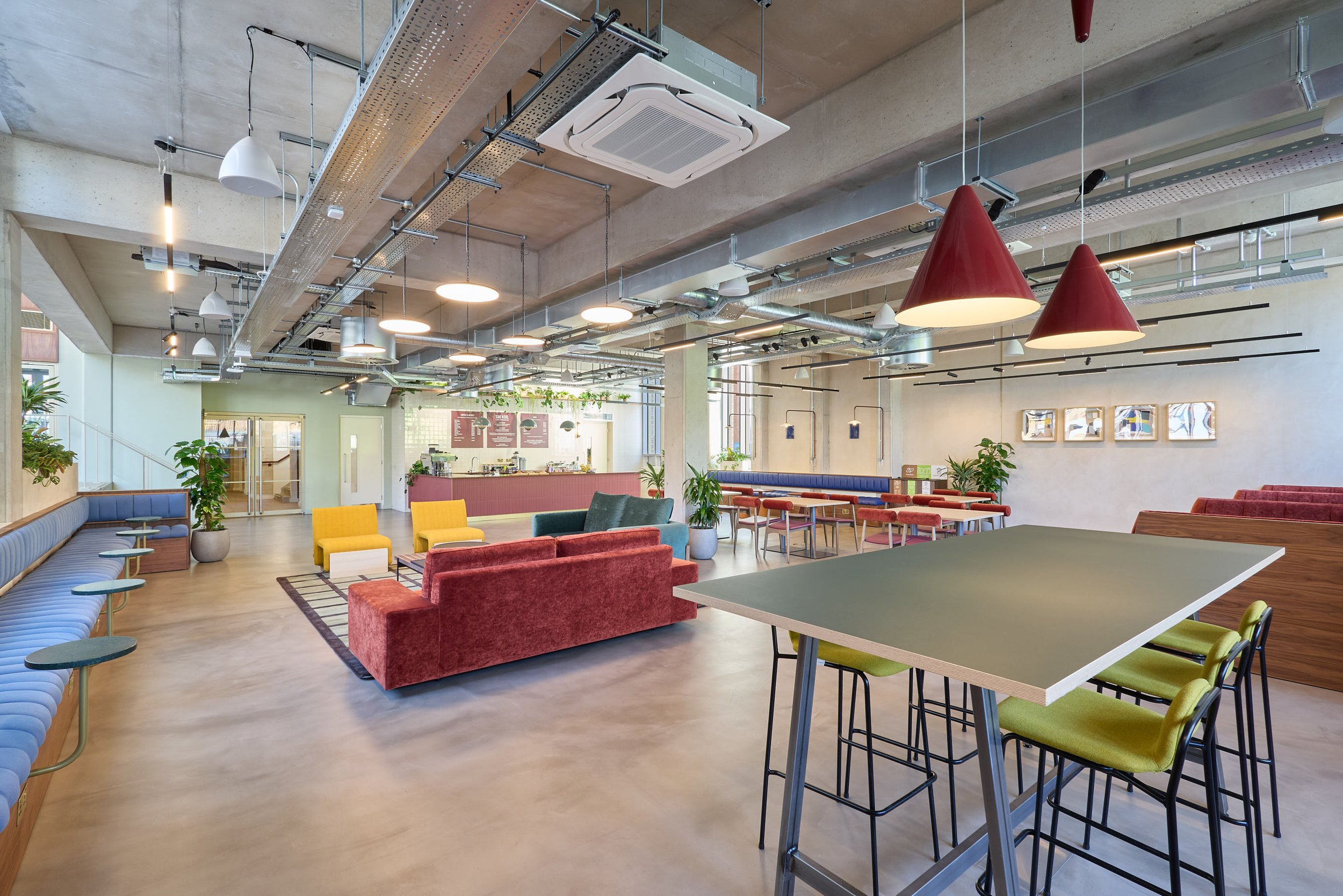
The most influential asset you already own
Businesses spend huge amounts of time thinking about strategy, technology, talent and brand. Yet one of the most influential business tools often gets overlooked: The workplace itself.
Your office is not simply where work happens. It is an active driver of how work happens. Done well, workspace design can improve wellbeing, strengthen culture, express brand identity, attract talent and directly influence business performance.
Space is not passive.
It is strategic infrastructure.

Welcome and social areas at MVF Global introduce visitors to it’s friendly, creative and fun personality without saying a word
First Impressions Are Formed in Seconds
Before a client hears a presentation.
Before a candidate meets the team.
Before a partner reads a proposal.
They experience your workplace.
From the moment someone walks through the door, your environment is communicating on your behalf. Lighting, layout, acoustics, materials, colour and flow all create an immediate impression about who you are and how you operate.
A well-designed workplace quietly signals:
professionalism
confidence
clarity of purpose
attention to detail
respect for people
These messages land long before any PowerPoint slide appears.

The welcome space at The Paul Mellon centre is cosy and calming
Designing Workspaces That Support Wellbeing
The link between workplace design and wellbeing is no longer theoretical – it is measurable and commercial.
Thoughtful environments influence:
concentration and productivity
stress levels
collaboration and creativity
physical comfort
mental health
staff retention
Natural daylight, good acoustics, access to quiet zones, ergonomic furniture, intuitive layouts and biophilic elements are not aesthetic extras. They are performance tools.
A workplace that cares for people creates people who care about their work.
Space as a Physical Expression of Brand
Most companies work hard to define their brand on screens and paper. Far fewer bring it to life convincingly in three dimensions.
Yet your office is one of the most powerful brand touchpoints you own.
Through design choices such as:
colour and material palettes
graphics and wayfinding
furniture selection
spatial planning
cultural touchpoints
a workspace can tell a story about values, personality and ambition.
An innovative company should feel innovative.
A creative company should feel creative.
A purpose-driven company should feel human.
When environment and brand are aligned, credibility grows exponentially.

On entering the office at Moo, joyful pops of colour, a sculptural installation that reflects the branding and fresh feeling create an exciting, youthful and creative energy
The Workplace as a Reputation Builder
Clients, collaborators and employees all draw conclusions from the spaces they encounter.
A considered workplace becomes part of your professional narrative:
“They really invest in their people.”
“The culture there feels energising.”
“It’s a serious, forward-thinking business.”
These perceptions influence decisions about who to work with, who to buy from and where to build a career.
Design shapes experience.
Experience shapes reputation.

One thirs of teh space at BenchSci was dedicated to supporting innovative sessions and events

We employed a democratic layout for MVF Global to ensure everyone has access to amenities and facilities
Space That Improves How Businesses Function
Good workspace design is not about looking impressive. It is about working better.
Intelligent space planning can:
improve team communication
reduce friction in daily workflows
support hybrid and flexible working
provide choice of settings for different tasks
encourage informal collaboration
make meetings more effective
The right layout can transform how an organisation operates day to day – often without adding a single extra square metre.
This is where design moves from decoration to genuine business strategy.
Supporting New Ways of Working
Work has changed fundamentally. Hybrid models, distributed teams and flexible hours mean the office must now earn its relevance.
Modern workspaces need to provide:
purposeful destinations
collaboration hubs
high-quality meeting environments
quiet focus areas
social and community spaces
technology that works seamlessly
The office of today is not just a place to sit at a desk – it is a platform for connection, creativity and culture.

International working meant comfortable video conferencing had to be supported at this office

Operating in one of the most competitive industry for recruiting talent, TriliTech ensured they invested in a space they would help them recruit
Attracting and Retaining Talent
In a competitive talent market, the workplace has become a crucial recruitment tool.
People increasingly choose employers based on environments that offer:
flexibility and autonomy
comfort and wellbeing
inspiring surroundings
spaces for focus and social connection
visible investment in culture
A compelling office is no longer a perk. It is a statement about how a business values its people.
Great workplaces help win great people.
The Measurable ROI of Workspace Design
The impact of space is both human and commercial.
Return on investment appears in:
higher productivity
reduced absenteeism
stronger staff engagement
improved recruitment
better client experiences
more effective collaboration
enhanced brand perception
Well-designed workplaces pay dividends every single day. Poorly designed ones create hidden costs that quietly drain performance.

Having been in the space for 15 years and ensuring they invest in the beautiful space, the team at Quantum really understand the value of their environment
Treat Space as Strategically as Any Other Asset
Too often, offices are viewed as a necessary overhead rather than a strategic opportunity.
Forward-thinking businesses understand that their workplace is as critical as their technology stack or marketing plan.
Because space shapes behaviour.
And behaviour drives results.
Final Thought
Your workplace is influencing how people feel, think and perform right now.
The only question is: Is it helping your business move forward – or holding it back?
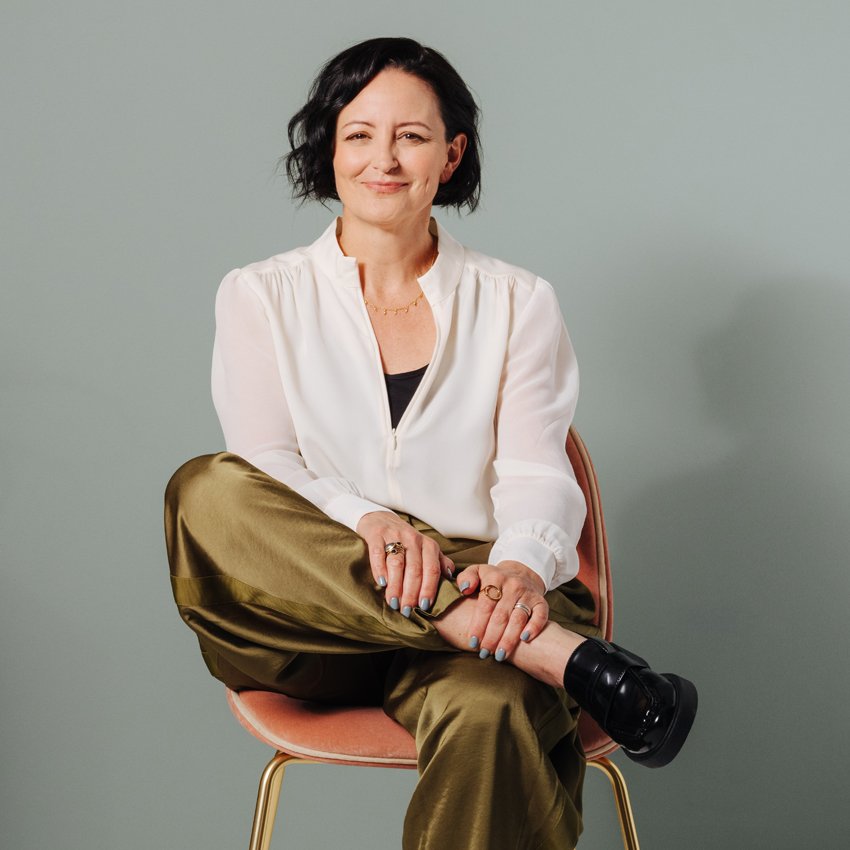
Author: Emma Morley, Director, Trifle*
Emma founded Trifle* in 2010 after a career in marketing, event design and production. Frustrated by the fact that only advertising agencies had inspiring spaces she had a desire to make good design the norm for all office workers. Emma has worked across well over 150 interior projects during her career at the helm of Trifle*, she remains passionate about making amazing spaces but also making the industry more accessible, more human and more diverse.