
Workspace Design Trends 2026: How Interior Space Planning Is Redefining the Office
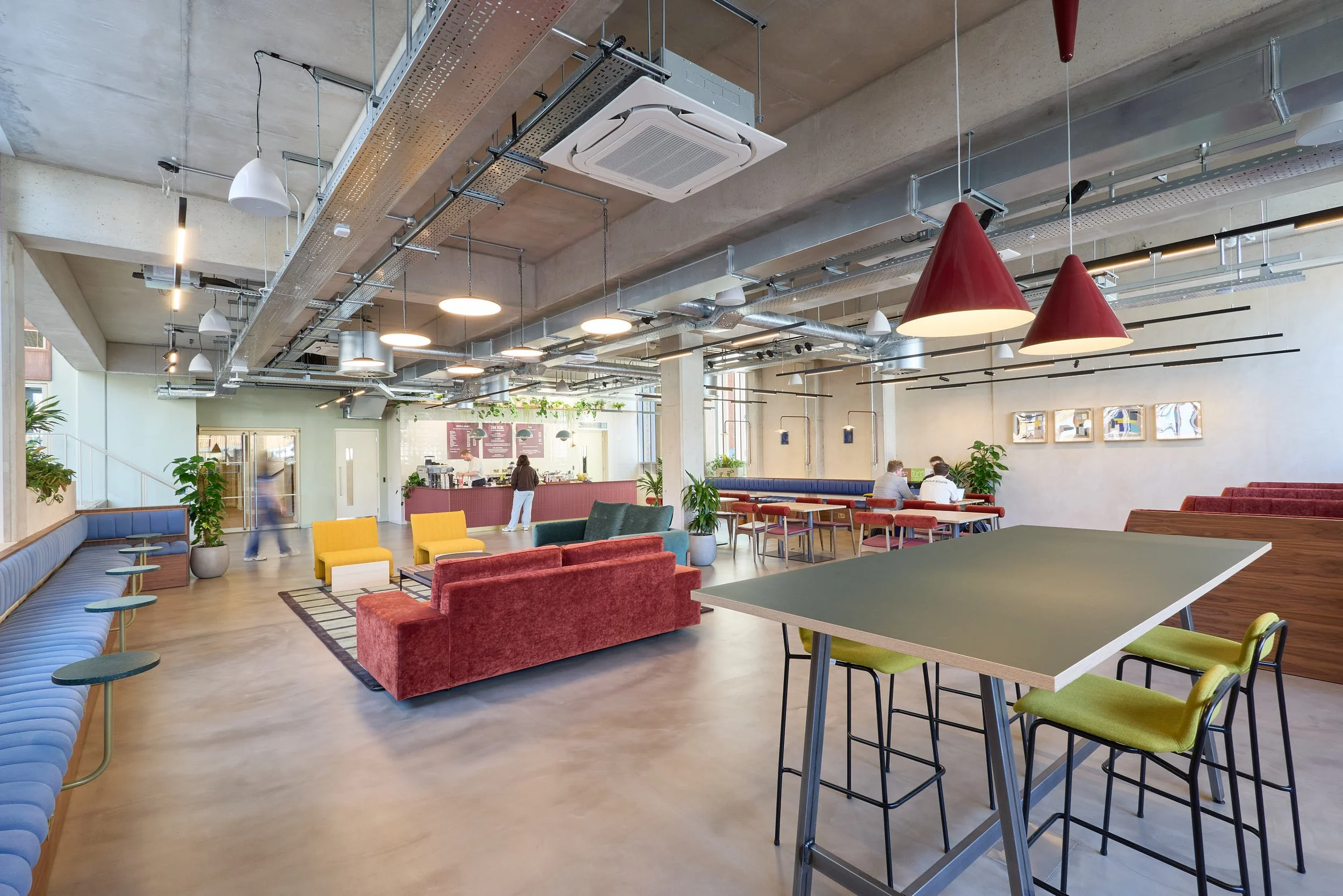
The multi-purpose, flexible cafe space in our design for Workspace’s first Net Zero project, Leroy House features recycled upholstery on the banquette seating
The hidden carbon cost in workplaces
For years, workplace design asked the wrong question: How many desks do we need?
In 2026, the question is far more interesting — and far more strategic: What is the office actually for?
The answer is reshaping workspace design from the ground up. Offices are no longer about attendance or density. They are about experience, connection, adaptability and brand. Interior space planning has become a business tool — not a facilities afterthought.
Here’s what’s shaping workspace design in 2026, and why the smartest organisations are rethinking the office entirely.
1. The Office as a Destination, Not an Obligation
Let’s be honest: if an office doesn’t offer something better than working from home, people won’t use it.
In 2026, successful workplaces are designed to be destinations. That means planning spaces people actively want to come to — not places they feel obliged to show up to.
This shift is driving:
Hospitality-inspired arrival spaces
Social, animated ground floors
Lounge-style settings that blur work and informal interaction
Less emphasis on rows of desks, more focus on experience
Interior space planning is now centred on how people feel when they arrive, not how many workstations fit on a floorplate. The office earns its keep by offering energy, connection and atmosphere — things remote work can’t replicate.
2. Activity-Based Planning Becomes the Norm
One-size-fits-all offices are officially dead.
In 2026, high-performing workplaces are designed around activities, not hierarchy or job titles. This is the evolution of activity-based working — and it’s now expected, not experimental.
Effective workspace planning includes:
Quiet zones for deep focus
Collaborative team areas
Enclosed spaces for calls and hybrid meetings
Informal touchdown and lounge settings
Spaces to decompress, reset or socialise
Crucially, good design makes these zones intuitive. Layout, colour, lighting and materiality do the heavy lifting — not endless signage or behavioural rules.
Choice equals autonomy. Autonomy equals trust. And trust, as it turns out, is good for business.
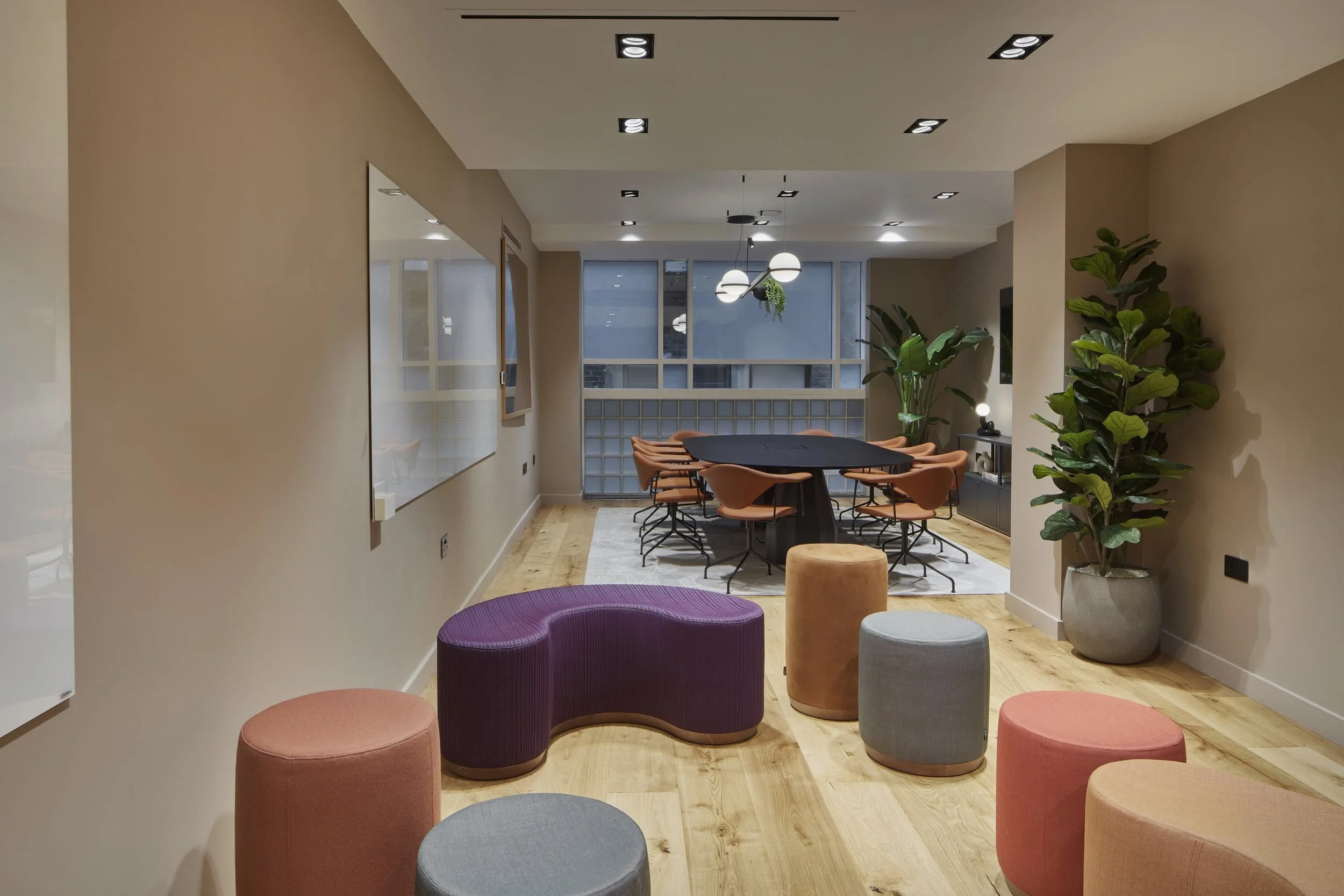
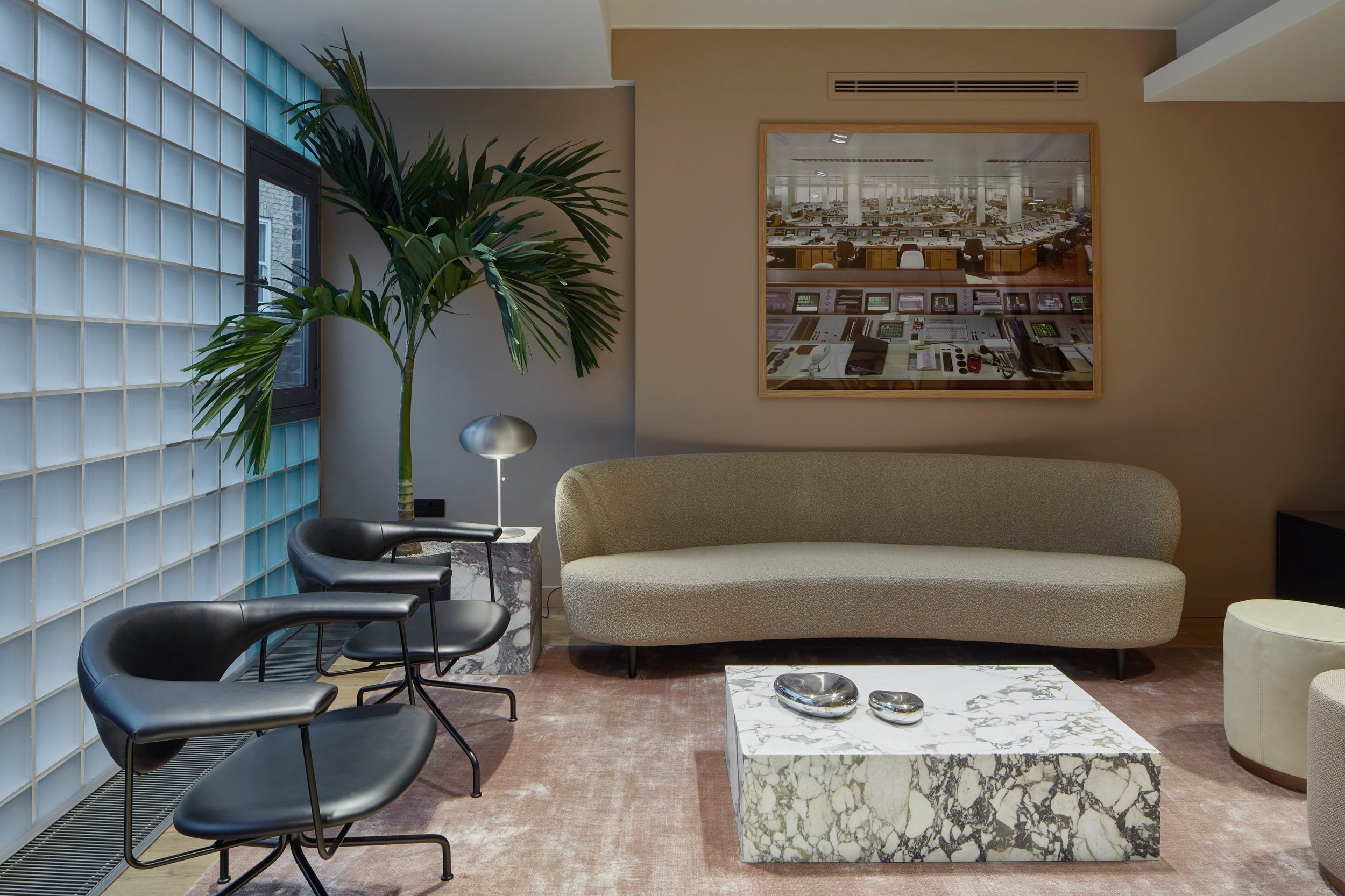
This meeting room at Trilitech incorporated a breakout zone within it for planning

This multi-purpose townhall space at MVF Global can facilitate co-working, collaborative working and all company meetings
3. Flexibility Is Designed In — Not Bolted On
Flexibility isn’t a buzzword anymore. It’s a commercial necessity.
In 2026, workspace interiors are designed to adapt over time, without major strip-outs or wasteful refits. That means planning for change from day one.
We’re seeing:
Modular furniture systems
Demountable and reconfigurable partitions
Multi-use spaces that shift from meetings to events
Power and data strategies that allow layouts to evolve
For landlords and developers, this directly impacts asset value and longevity. For occupiers, it reduces future cost and disruption. For everyone involved, it’s just good sense.
4. Hybrid Workspaces That Put Humans First
Hybrid working isn’t going anywhere. But designing offices around technology alone is a fast route to soulless space.
In 2026, the best hybrid workplaces prioritise human comfort first, with technology seamlessly integrated — not centre stage.
Key design responses include:
Fewer, better-designed meeting rooms
Stronger acoustic control across the workplace
Lighting that works for people and cameras
Integrated AV that doesn’t dominate the aesthetic
The goal isn’t to replicate Zoom in real life. It’s to support collaboration while preserving warmth, character and atmosphere.

These larger zoom rooms at BenchSci comfortably facilitated 2 or more people to support their international company
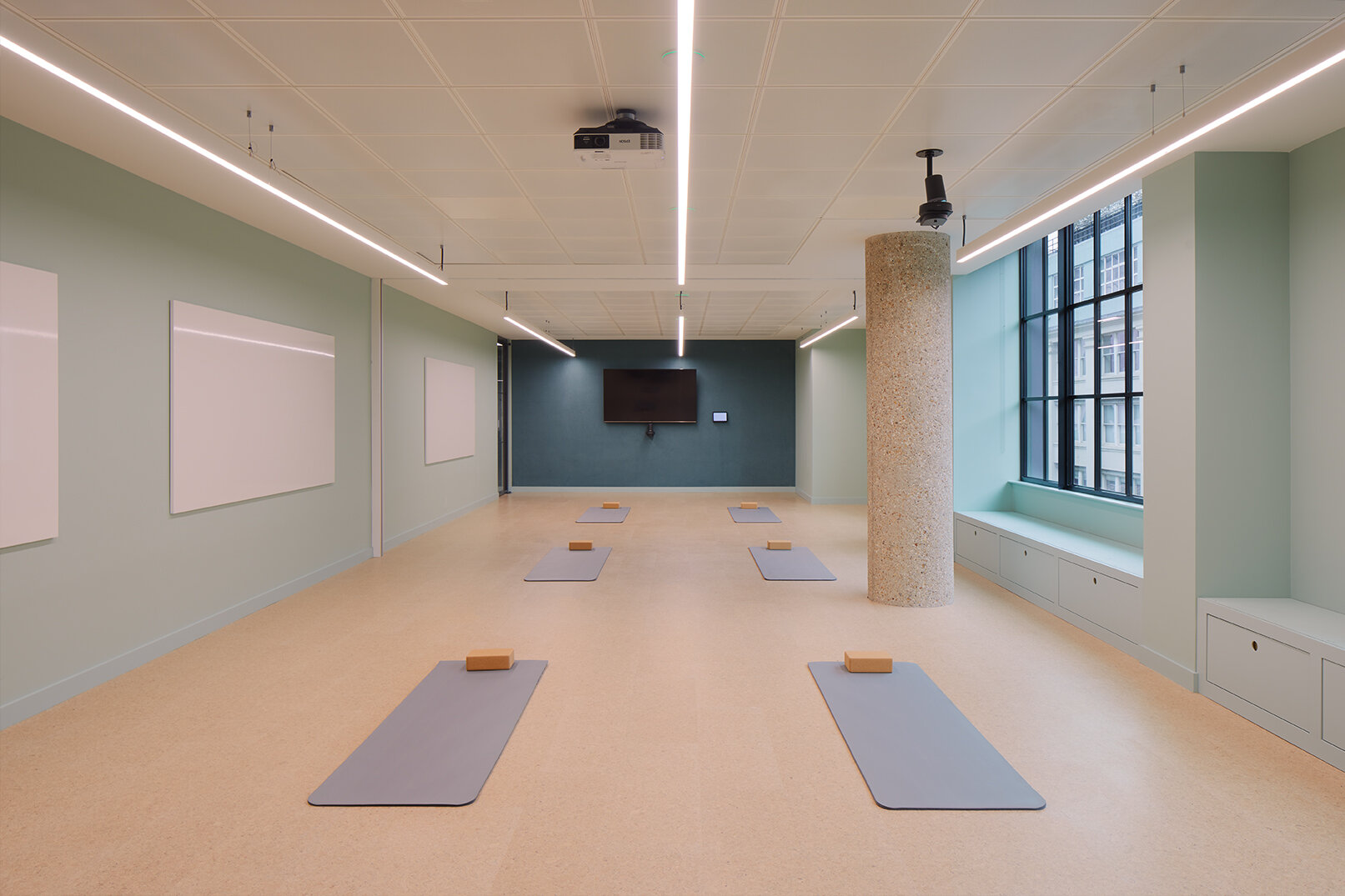
To take advantage of the light filled space, the training room at MVF was designed to be flexible enough to accommodate yoga classes
5. Wellbeing Is Embedded, Not Branded
By 2026, wellbeing theatre is over.
No more token planting schemes or unused meditation rooms. Instead, wellbeing is built into everyday spatial decisions.
This includes:
Maximising natural light and views
Designing spaces that encourage movement
Providing calm environments away from constant stimulation
Considering neurodiversity, sensory comfort and inclusion
Using natural, tactile materials that feel good to be around
Wellbeing-led workspace design isn’t about perks. It’s about creating environments that support people over the long term — physically, mentally and emotionally.
6. Sustainability Moves From Statement to Strategy
Sustainability in 2026 is less about labels and more about long-term thinking.
Workspace design is increasingly shaped by:
Reuse of existing buildings and interiors
Circular design principles
Retaining and repurposing furniture
Selecting durable, low-impact materials
Designing for longevity, not trends
Clients are asking tougher questions — and rightly so. Good workspace design now balances ambition with responsibility.
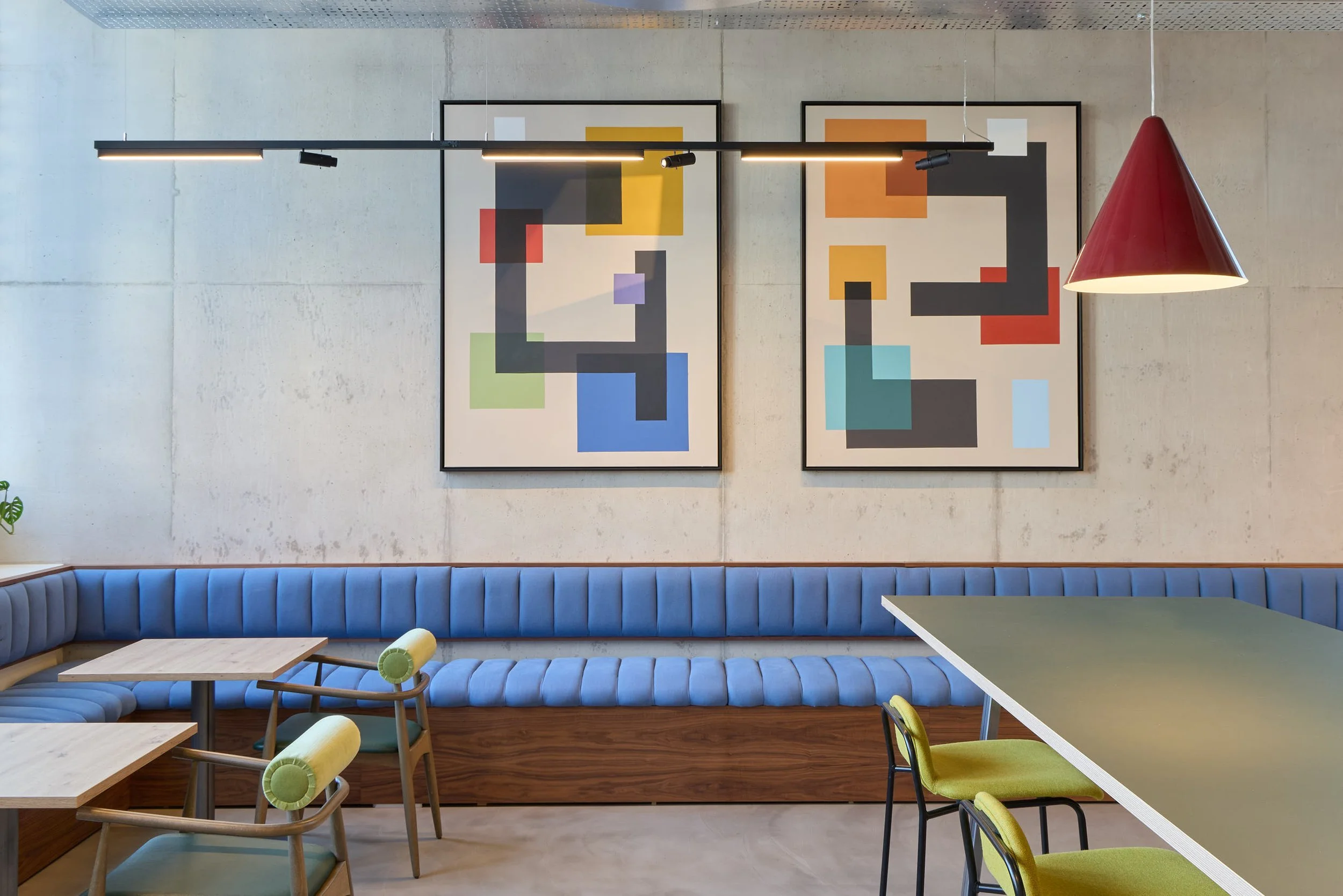
The cafe space in our design for Workspace’s first Net Zero project, Leroy House features recycled upholstery on the banquette seating

At MVF we spent a lot of time understanding the brand and its people to create a scheme that embodied it’s culture and values
7. Stronger Brand Expression Through Interior Design
In a hybrid world, the office has become one of the most powerful expressions of brand and culture.
In 2026, organisations are using interior design to say something meaningful about who they are — not to mimic generic “tech office” aesthetics.
This shows up through:
Confident use of colour and texture
Bespoke joinery and furniture
Art and local collaborations
Layouts that reflect how teams actually work
The most successful workplaces feel specific, not generic. They could only belong to that organisation — and that’s exactly the point.
The Takeaway
The biggest workspace trend in 2026 isn’t a look or a layout — it’s intentionality.
The office has evolved into a strategic tool that:
Supports how people actually work
Strengthens culture and brand
Enhances wellbeing and performance
Protects long-term value
Designing workplaces well in 2026 means understanding people first, space second — and trends last.

Author: Nadia Themistocleous, Trifle*
Nadia has worked with Trifle* since 2016 and has been the interior lead for some of our most ambitious projects to date including MVF, BenchSci and TriliTech. Prior to Trifle* and managing her own interior design company, she worked for a decade in advertising and the music industry creating and executing creative campaigns and events. She is passionate about translating our client’s culture, identity or ways of working into the spaces they inhabit ensuring that every space created for our clients is as unique as their business or home is.