
Why Materials Matter: The Hidden Carbon Footprint of Office Fit-Outs — And How to Cut It
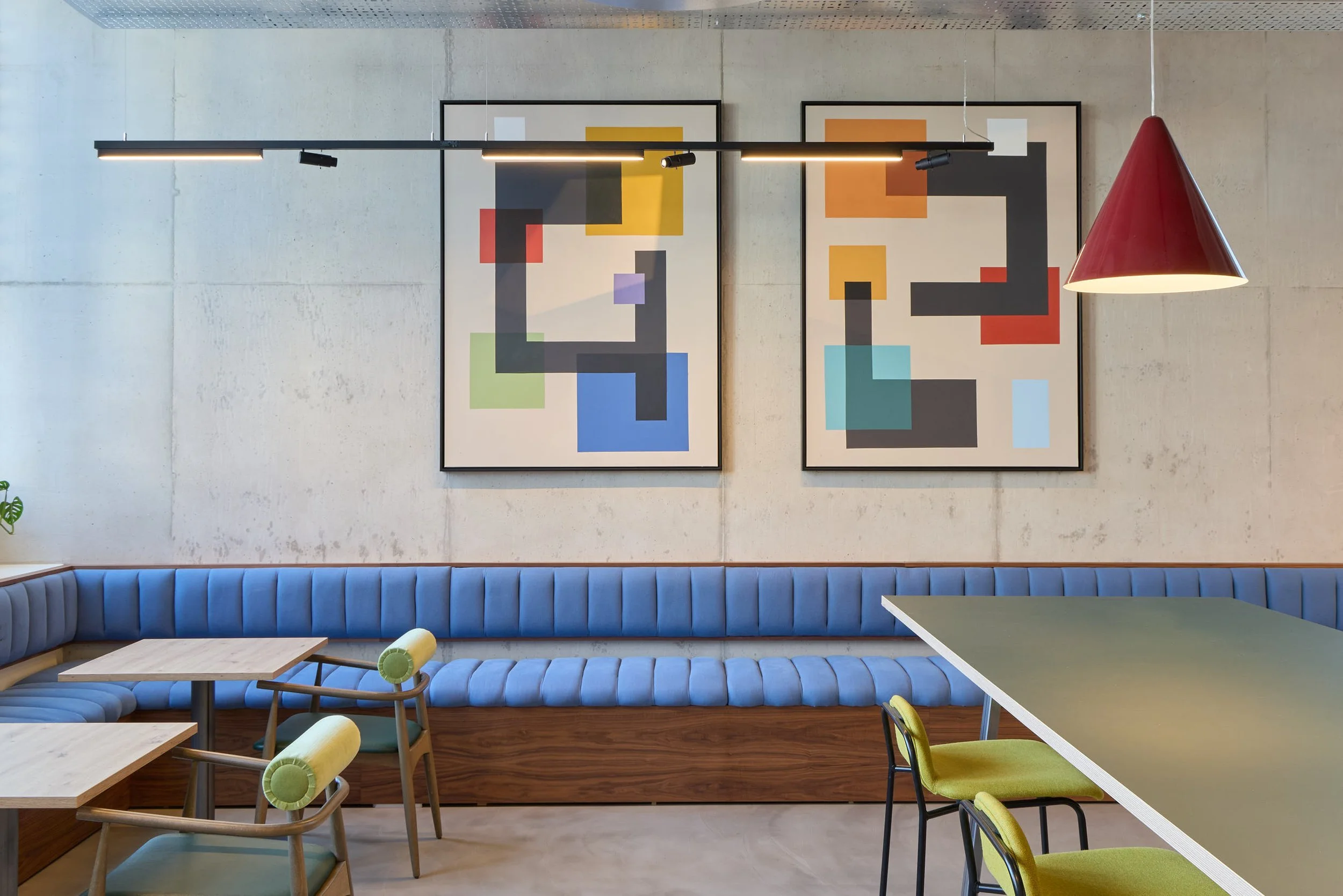
The cafe space in our design for Workspace’s first Net Zero project, Leroy House features recycled upholstery on the banquette seating
The hidden carbon cost in workplaces
When businesses talk about “sustainable workplaces,” the conversation almost always starts with energy efficiency — LED lighting, reduced travel, maybe a recycling station or two. But the single biggest environmental impact of a new office is something most organisations never consider: The carbon cost of the materials themselves.
Every carpet tile, desk base, plasterboard sheet, acoustic panel and paint finish carries a hidden carbon footprint — known as embodied carbon. And for most commercial interiors, embodied carbon makes up 60–75% of their total footprint over the life of the space.
That means the most meaningful sustainability decisions aren’t made at the photocopier…
They’re made on the spec sheet.
What Is Embodied Carbon, and Why Does It Matter?
Embodied carbon includes all the emissions created before a product reaches your workspace from the extraction of raw materials, manufacturing, transporting and installing.
In the UK, fit-out waste represents over 20% of landfill volumes, and most office refurb cycles occur every 5–7 years, often unnecessarily.
A new office with “sustainable lighting” but brand-new desks, carpets, partitions and ceilings may carry far more emissions than its operational footprint.
How to Reduce Office Fit-Out Carbon Without Compromising Quality
Below are the most powerful, proven strategies.
1. Reuse Before You Replace (The 20-Year Mindset)
The most sustainable product is the one you already have.
Reupholster rather than replace seating
Respray metal frames rather than buying new
Retain or relocate meeting pods / flexible furniture
Re-cover storage / kitchens instead of scrapping
Refurbishment generally uses 70–90% less carbon than manufacturing new furniture.
At our project for Deadgood’s showroom, we reinvigorated a chair at our project for Deadgood’s showroom bringing a new lease of life but also an 85% increase in sales.
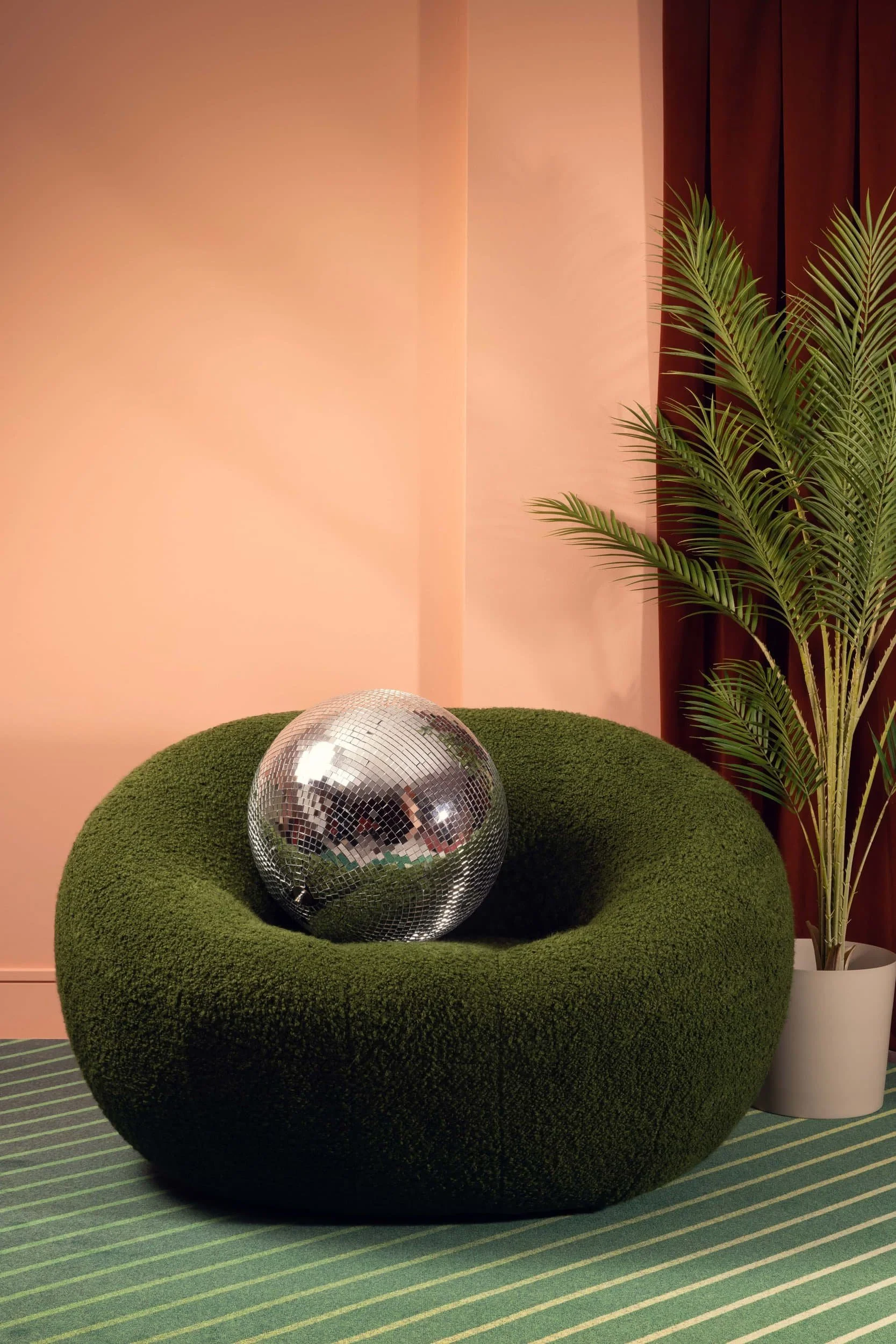
The reupholstered Capsule Chair
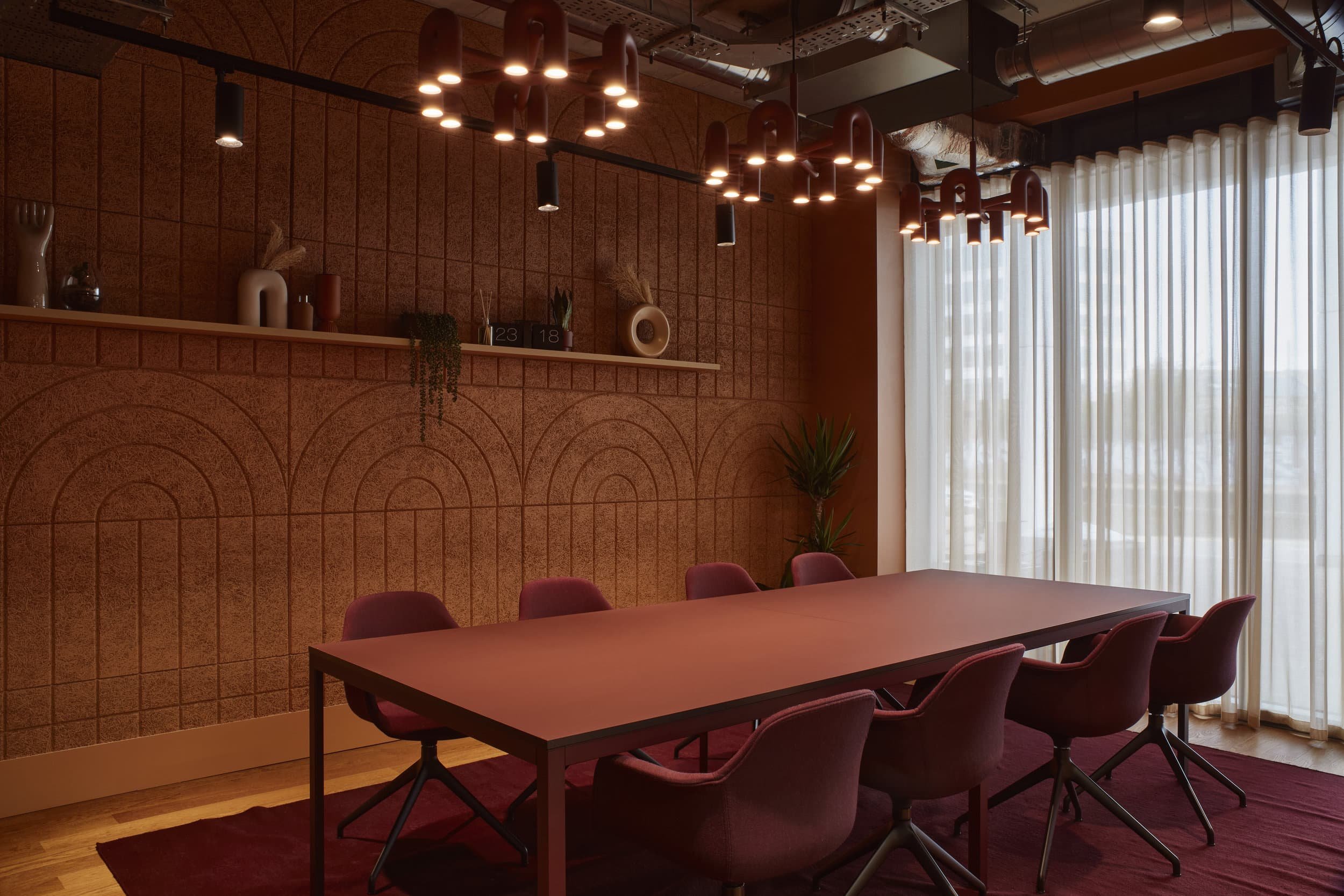
Environmentally friendly acoustic panels at our Mirrorworks project
2. Choose Low-Carbon Material Substitutes
If you do need new elements:
Carpet tiles: Choose recycled nylon or bio-based fibres
Timber: FSC-certified, ideally UK or EU sourced
Acoustics: PET panels made from recycled bottles or natural materials
Partitions: Demountable systems that can be reused
Switching just one material category (e.g., carpet) can cut emissions by 15–20%.
At our project for Mirrorworks we utilised BAUX Acoustic Wood Wool Panels - an environmentally friendly, recyclable material made from wood wool, cement and water.
3. Opt for the Modular
A modular office is a low-carbon office because it avoids demolition.
Modular meeting rooms
Modular flooring
Modular soft seating
Modular electrical systems
This can make future reconfigurations near-zero waste.

Modular furniture at MVF had the benefit of flexibility as well as building for the long term

4. Partner With Circular Suppliers
Look for companies offering:
Product take-back schemes
Furniture remanufacturing
End-of-life recycling guarantees
Furniture-as-a-service
This can reduce the office’s footprint by 30–40%. At our BenchSci project in we used Tarkett’s Retrace carpet tiles which are Cradle to Cradle Gold and selected for their low circular carbon footprint. Made from 100% recycled yarn, with an EcoBased backing, these tiles are also 100% recyclable at end of life. The worn out ceiling was given a new lease of life by just replacing the ceiling panels with wood wool panels that have Blue Angel, Indoor Climate Label and Cradle to Cradle Certified® Gold certifications.
5. Design for Disassembly
This means every component can be separated, reused, repaired or recycled.
Avoid:
Glued finishes
Multi-material bonded products
Permanent joinery where possible
Use:
Screw-fastened systems
Clip-in ceilings
Non-adhesive flooring
You make the next fit-out dramatically more sustainable.

The Noodle chair from DeadGood is constructed using a recycled steel frame and incorporating foams made of plant-based bio compounds, ‘Noodle’ showcases a commitment to sustainability and circular design principles.
6. Measure to Improve
Use tools such as:
Measure early so carbon becomes a design metric — not an afterthought.
The Takeaway
You can’t manage what you don’t measure. By shifting focus from operational carbon to embodied carbon, businesses can dramatically reduce their environmental impact — and often save money.
Sustainable workplaces aren’t green-washed. They’re smart, circular, low-waste, and future-proofed.

Author: Nadia Themistocleous, Trifle*
Nadia has worked with Trifle* since 2016 and has been the interior lead for some of our most ambitious projects to date including MVF, BenchSci and TriliTech. Prior to Trifle* and managing her own interior design company, she worked for a decade in advertising and the music industry creating and executing creative campaigns and events. She is passionate about translating our client’s culture, identity or ways of working into the spaces they inhabit ensuring that every space created for our clients is as unique as their business or home is.