
Outside Space: Our Original Setting
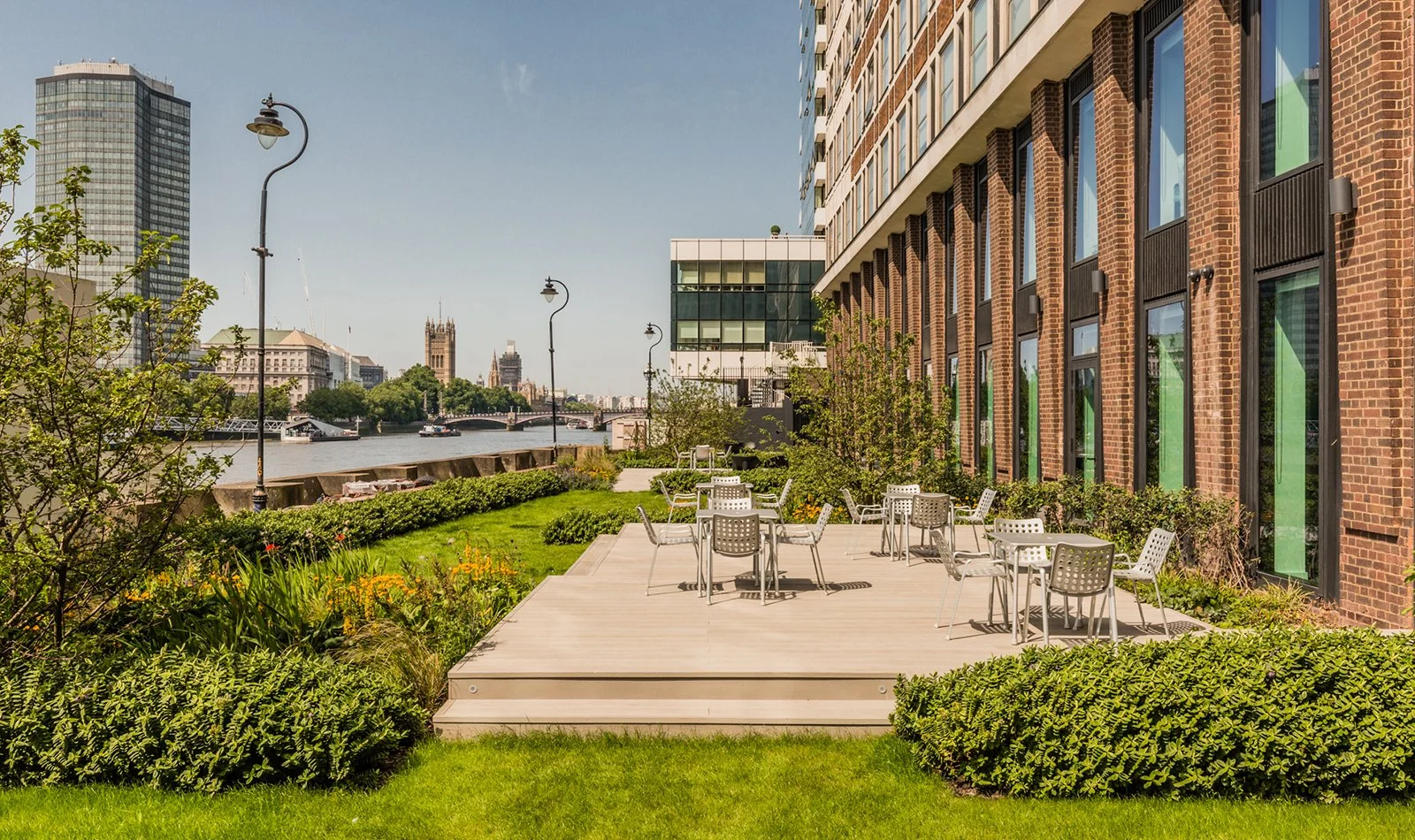
Connecting the Thames at TOG Tintagel House
Outside-in-thinking
Outside space is often treated as an optional extra, a nice-to-have balcony, a roof terrace, or a courtyard squeezed into a planning application. From a design perspective, that framing misses the point entirely.
Outside space isn’t separate from interior space; it shapes how interiors are experienced.
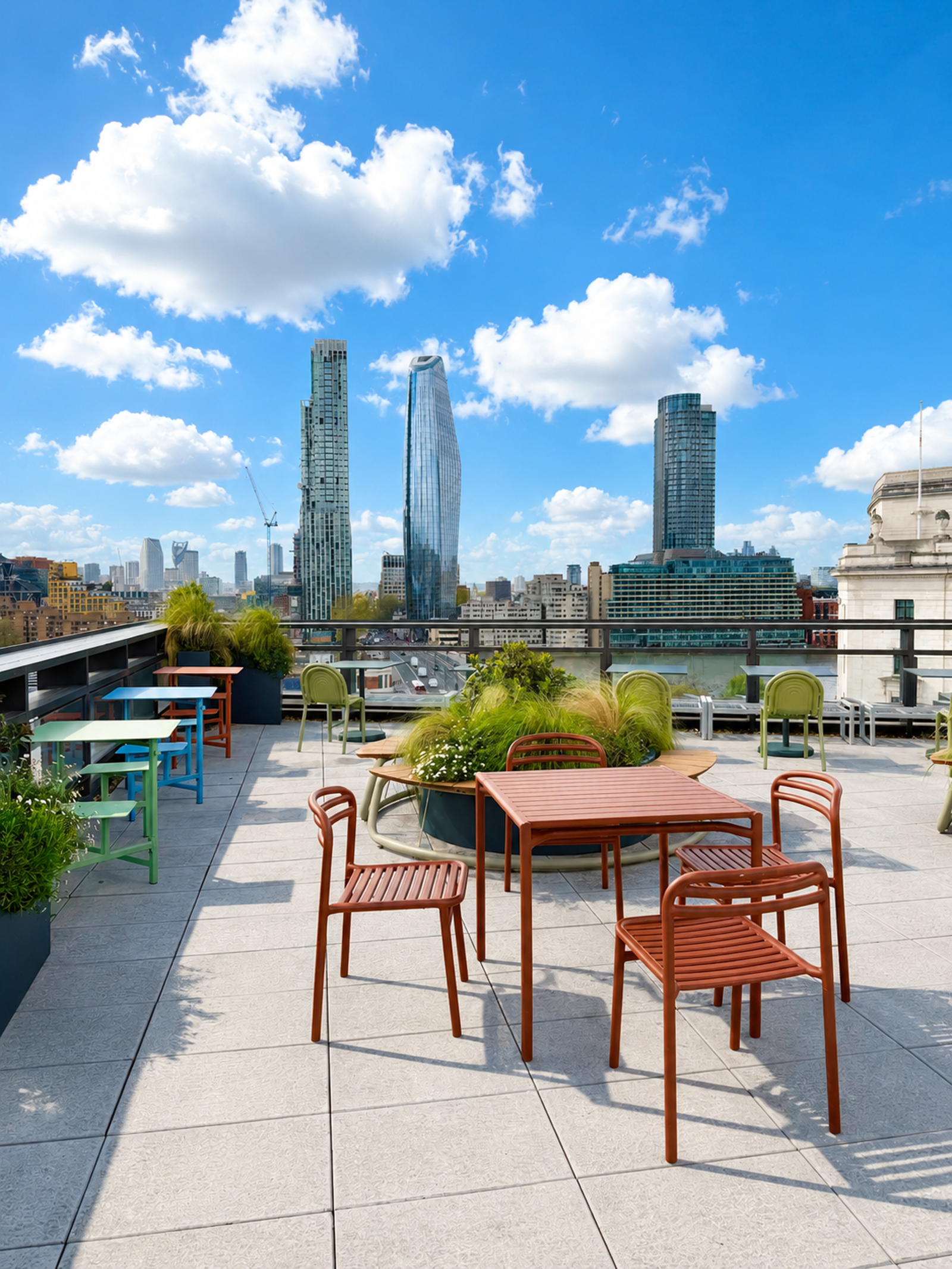
Incorporating views at Beaumont Blackfriars
Long before we navigated inboxes, interfaces and endless notifications, we learnt to read light, air and horizon. The human nervous system evolved in response to changing skies, shifting weather and open landscapes, not artificial lighting and back-to-back Teams calls. When we talk about outside space, we’re not simply talking about what happens beyond the building envelope; we’re talking about something far more fundamental: our connection to context.
And that matters just as much from inside as it does outside.
A well-designed interior doesn’t stop at four walls. It considers sightlines, borrowed landscape, daylight, thresholds and the subtle relationship between enclosure and openness. Sometimes the most powerful connection to outside space isn’t a terrace at all it’s a perfectly framed view of mature trees from a workspace, morning light moving across a breakout area, or the way glazing draws the sky deep into a room.
That visual connection changes how a space feels. It gives the eye somewhere to rest beyond a screen or a wall, introduces depth and softness into environments that might otherwise feel compressed, and shifts our perception of scale. Even in dense urban settings, a glimpse of sky, planting or distant horizon can create a sense of release.
Good interiors understand this. They don’t fight the outside world; they borrow from it.
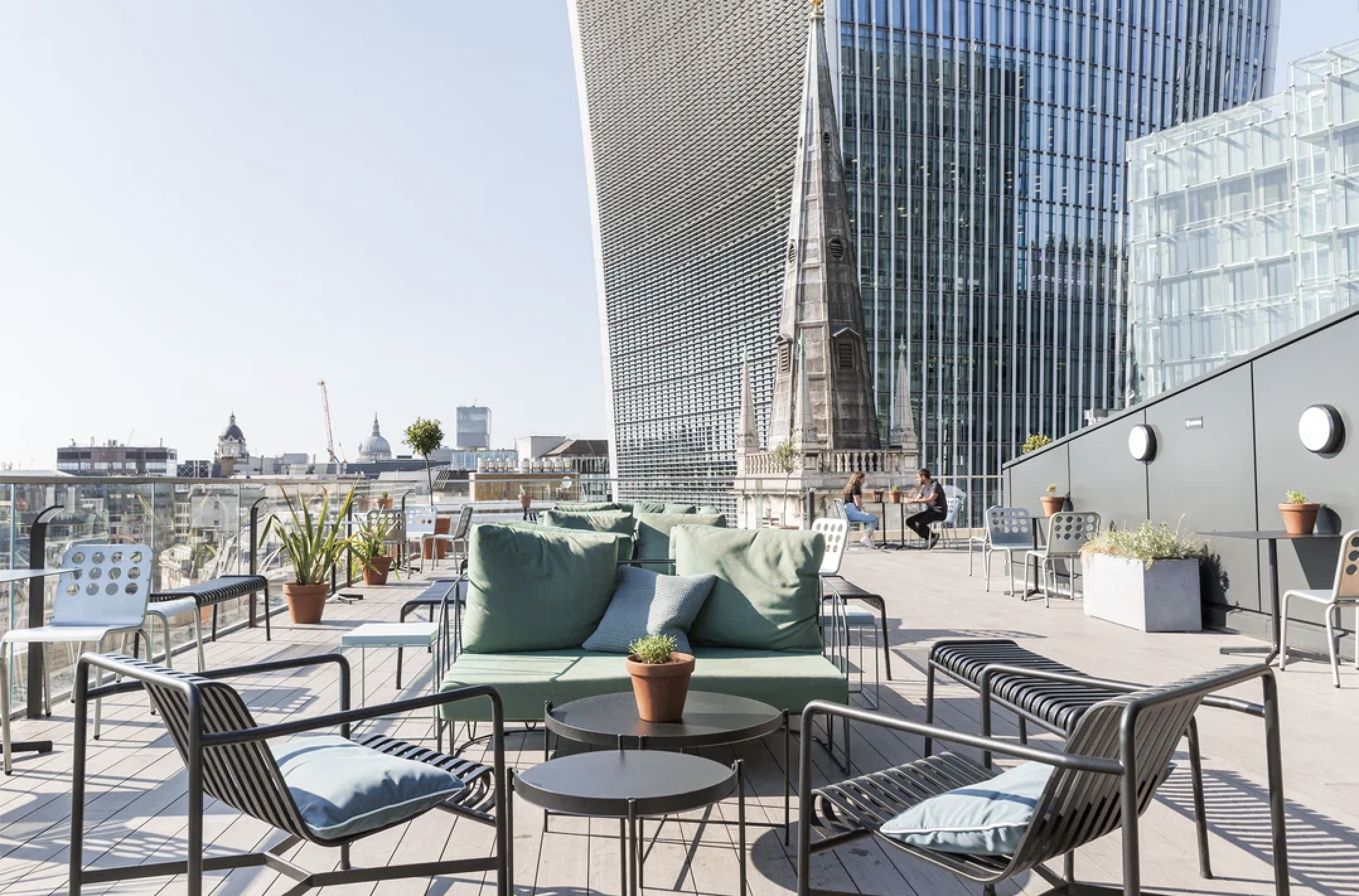
Part of the skyline at WeWork Monument
This is why thresholds matter so much. The spaces between inside and out (terraces, courtyards, verandas, winter gardens, roof gardens and generous window seats) are often where the most meaningful moments happen. They offer flexibility: somewhere to pause, reset, think, connect or simply breathe.
These in-between spaces are incredibly valuable because they support different modes of being. They allow us to feel part of something while still giving us room to exhale. That matters at home, but equally in workplaces, hospitality and public environments.
In workplace design especially, we’re seeing growing recognition that people think, collaborate and recover better when they have access to daylight, fresh air and varied settings. Not every conversation belongs in a meeting room. Some ideas arrive walking on a terrace. Some decisions become easier after five minutes in natural light. Sometimes perspective comes not from trying harder, but from stepping into a bigger frame.
The most memorable spaces rarely succeed because of finishes alone. They succeed because of atmosphere and that is shaped as much by light, outlook and sensory connection as by furniture or materials. A beautiful interior with no relationship to the outside can still feel strangely flat. By contrast, even relatively simple interiors can feel extraordinary when they engage meaningfully with light, landscape or view.
This is why we believe outside space should never be treated as decorative. Whether it’s a private garden, shared courtyard, roof terrace, pocket park or simply a carefully framed outlook, connection to the outside should be considered fundamental to good design.
Because ultimately, great design isn’t just about what we build within walls. It’s about how spaces make us feel.
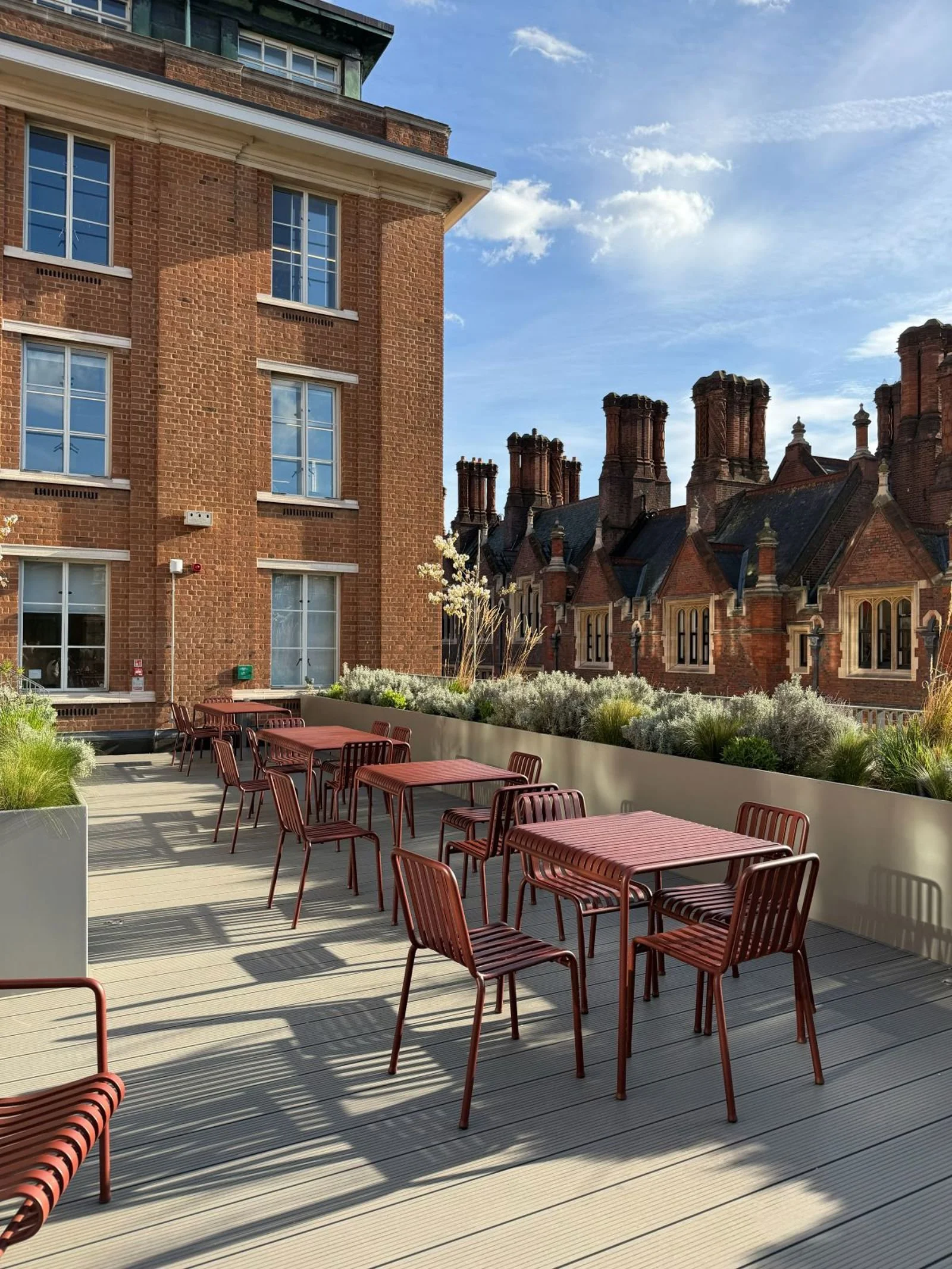
Embodying the buildings at Fora Space Chancery House
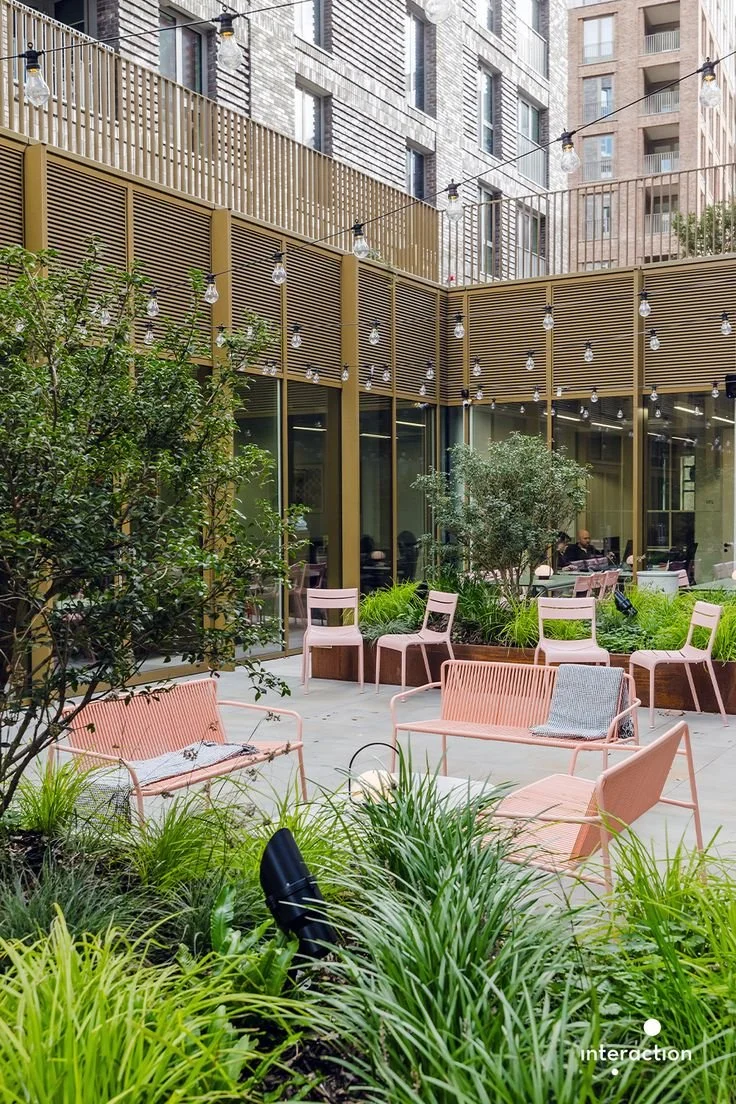
Capitalising on the calm Courtyard at The Foundry
The best interiors don’t isolate us from the outside world; they reconnect us to it.
That matters more than ever in modern working life. Many of us now spend entire days moving between screens, from laptops to phones to meeting rooms to video calls - often with very little exposure to natural light, fresh air or long-distance views. In highly controlled environments, it becomes surprisingly easy to lose touch with the natural rhythms that help regulate focus, energy and recovery.
This is where workspace design matters. A well-designed workplace should do more than accommodate desks and meetings; it should actively support wellbeing, concentration and human connection. Access to daylight, views of greenery, outdoor breakout spaces, terraces, courtyards, operable windows and carefully framed sightlines all contribute to how people feel and perform throughout the day.
And while not every workplace has a roof garden or landscaped courtyard, small behavioural shifts still matter. Step outside between meetings. Take a walking call. Eat lunch away from your desk. Move closer to a window when you need to reset. Even ten minutes outdoors during the working day can help reduce mental fatigue and restore focus.
One particularly valuable habit is getting natural daylight within the first hour of waking, ideally before opening your laptop. Morning light helps regulate our circadian rhythm, supporting alertness during the day and better sleep at night. Think of it as the first and most important lighting cue of the day.
Before emails and notifications take over, open the curtains, step outside with your coffee and take in the daylight.
Because great design isn’t only about creating better interiors. It’s also about designing spaces and encouraging habits that reconnect us to our original setting.

Author: Emma Morley, Director, Trifle*
Emma founded Trifle* in 2010 after a career in marketing, event design and production. Frustrated by the fact that only advertising agencies had inspiring spaces she had a desire to make good design the norm for all office workers. Emma has worked across well over 150 interior projects during her career at the helm of Trifle*, she remains passionate about making amazing spaces but also making the industry more accessible, more human and more diverse.