
We sat down with our friend and talented garden designer Mark Hardy. Known for his unique approach, Mark focuses on seamlessly connecting outdoor spaces to the architecture they surround, creating immersive and comfortable environments that feel as though they have naturally evolved over time.

Out talented gardening friend Mark from Mark Hardy Design
1. Where do you always start when someone comes to you with a blank outdoor space?
I always start with the house.
For me, a good garden should feel connected to the architecture it surrounds. That might mean responding to the period of the building, its proportions, its materials, or even the way the interior spaces are arranged. A garden should never feel like something that has simply been placed outside. It should feel as though it belongs there.
The best outdoor spaces feel comfortable and familiar, almost as if they have evolved naturally over time.
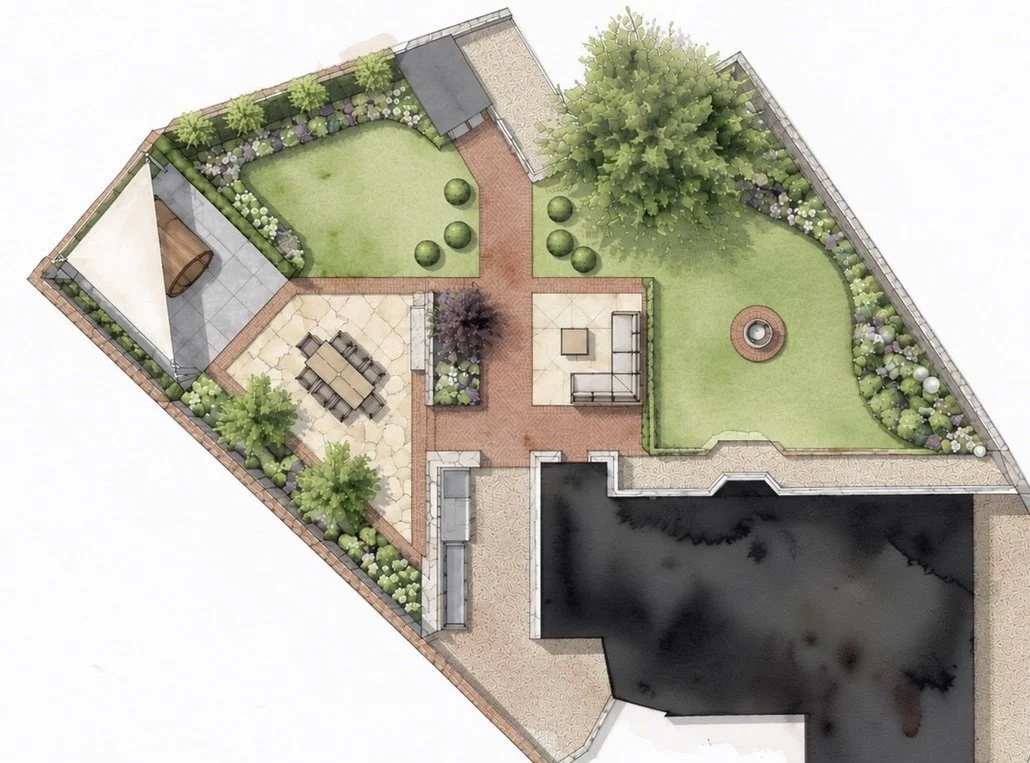
Mark carves up the space to create different zones
2. What’s the single most common mistake people make in their gardens, and how do you fix it?
The most common mistake people make is pushing all planting to the perimeter and leaving one large, empty lawn in the middle.
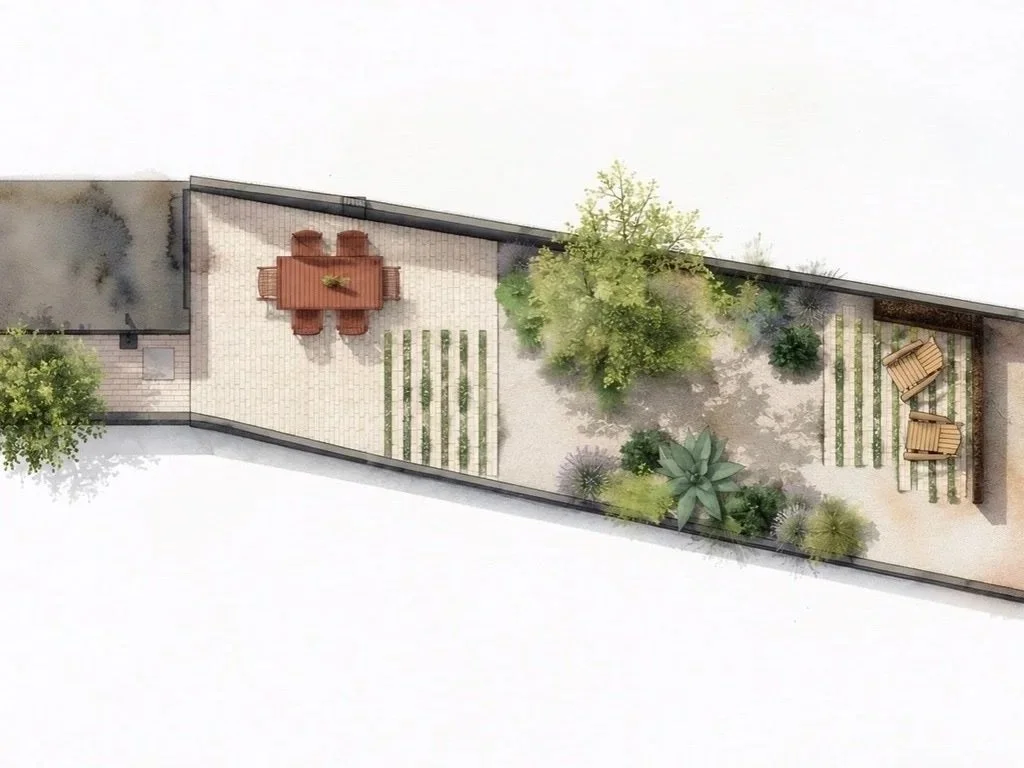
It is such a familiar layout, but it often does very little for the way people actually live outside. I prefer to carve up the space and create different zones: somewhere private to read a book, somewhere sunny to lay on a lounger, somewhere to eat, somewhere to entertain, somewhere for the kids to play. Then I think carefully about how people move between those spaces.
I also encourage clients to think about the view from inside the house. In the UK, most of us spend more time looking out at our gardens than physically being in them, so the view through the windows is much more important than people realise. A good garden should work beautifully from both sides of the glass.
3. Hardy by name, hardy by nature — what are your non-negotiable go-to plants for a garden that looks great year-round with minimal fuss?
Ferns. Lots of them.
They are incredibly useful, especially in urban gardens where there are often shady corners and awkward pockets of space. Many varieties are evergreen, so they bring structure and texture throughout the year, and they have this wonderful ability to make a garden feel lush, layered and quietly magical.
For sunnier spaces I love ornamental grasses, particularly taller varieties with soft, airy seed heads. They move beautifully in the breeze and create an elegant, relaxed backdrop for summer perennials. They are brilliant for giving a garden atmosphere without making it feel over-designed.
For sunnier spaces Mark loves ornamental grasses, particularly taller varieties with soft, airy seed heads. They move beautifully in the breeze and create an elegant, relaxed backdrop
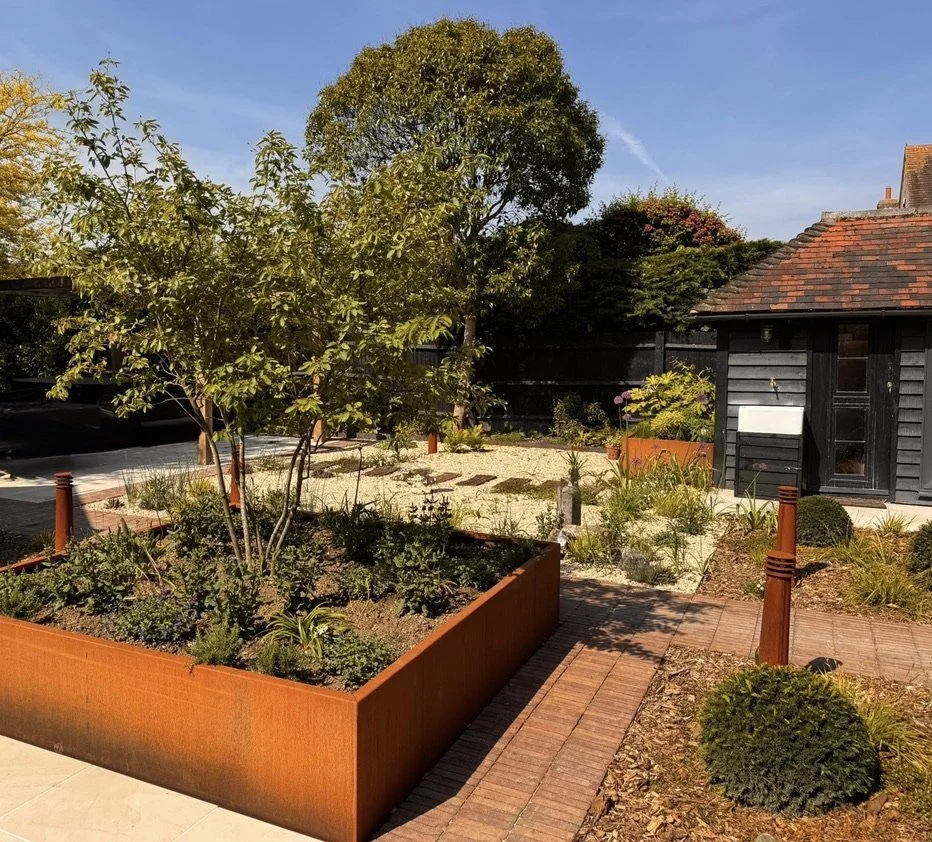
4. We’re deep into June — is it too late for someone to achieve a beautiful summer garden this year, or is there still time?
It's never too late to achieve a beautiful garden but I always say to my clients, "There's no such thing as an instant garden" (whatever Alan Titchmarsh might tell you!). Growing and nurturing a garden is all about savouring the season and living life in the slow lane. If you do want to add an instant burst of colour and energy to your garden, consider planting large, oversized pots with a selection of colourful perennials - you may have heard of the planting analogy 'Killer, thriller and filler' - if not, Google this to discover a lovely way to mix plants for maximum impact. You can buy relatively mature perennials at this time of year and still expect 2-3 months of flower.
5. How do you think about the relationship between indoor and outdoor space — where does the interior end and the garden begin?
I see the outside as an equal partner to the inside of any home and the way we transition between the two should be seamless. This could be shared materiality between the inside and out, or more about a consistent ambience, colour or lighting scheme.
The relationship many of us have with our outside spaces has changed fundamentally since the Covid era, when those with outside space at home suddenly realised how vital it was. Our gardens were suddenly a more valued part of our home and feeling comfortable in them meant reappraising how they were designed and laid out. We spend time in our gardens, or time looking out at them, so I feel inside and out are intrinsically linked.
6. What’s a small, low-budget change that can transform an outdoor space immediately?
Well-considered outdoor lighting.
It doesn't have to be complicated or expensive. Gentle uplighting on a tree, low-level lighting around a dining area, or subtle directional lighting along a path can completely change how a garden feels in the evening.
Even a simple string of festoon lights can bring a sense of warmth and occasion. The trick is to keep it soft. You are trying to create an atmosphere, not floodlight the garden.
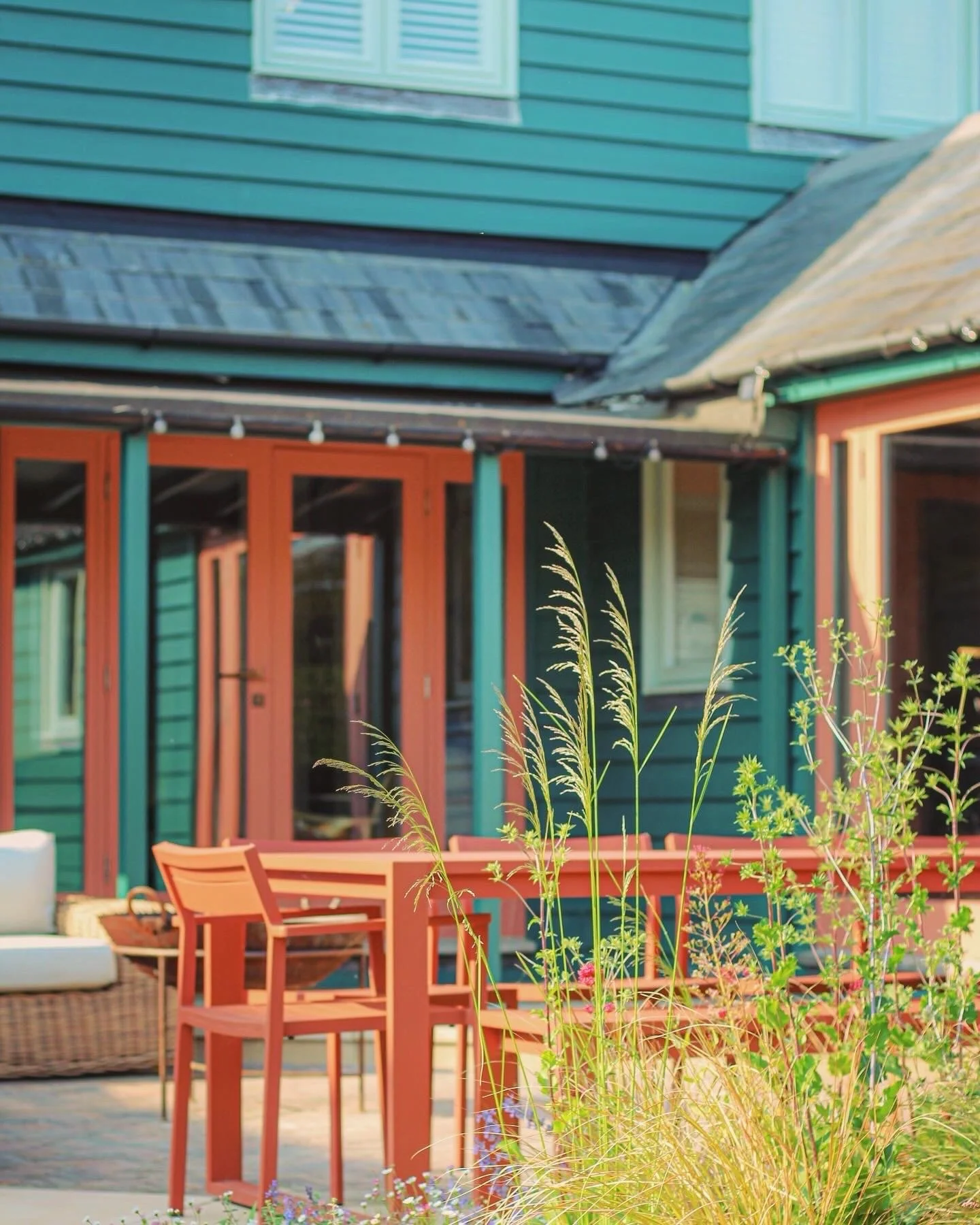
Mark feels that inside and out are intrinsically linked
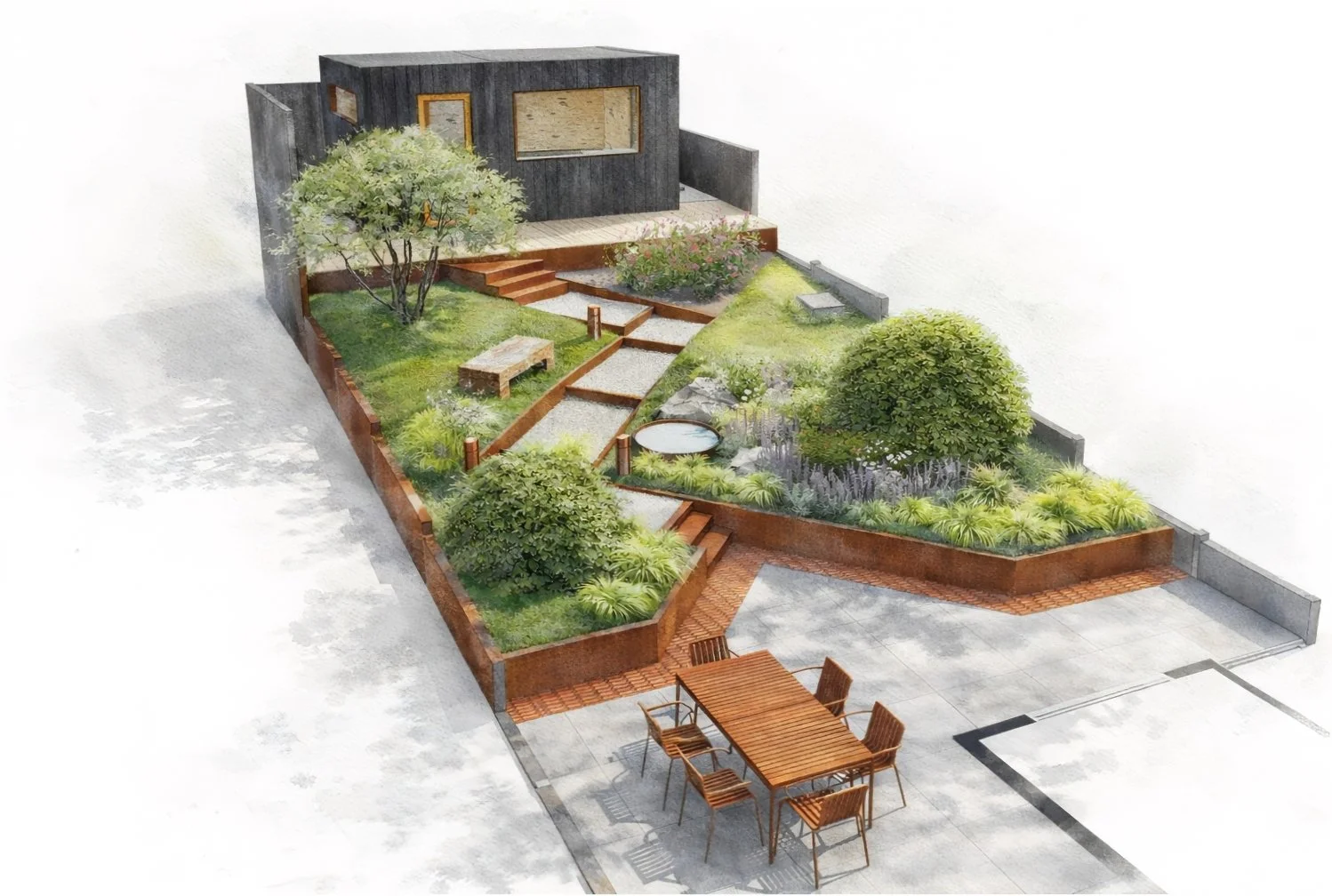
Mark plans gardens in such a way that they are able to sustain themselves
7. Naturalistic, re-wilded gardens are having a major moment right now. Is this a lasting shift or just a trend?
I think this is a lasting shift. Climate change is happening right now, whether at a macro or local level. Summers are hotter, Winters are wetter. This means we need to make more resilient planting choices. The principle of 'right plant, right place' and 'native planting' has never been more pertinent. We need to plant our gardens in such a way that they are able to sustain themselves. Nature will always show us the way and whatever is wild or native to a particular micro climate will do best.
8. What’s inspiring you most in garden design right now — a project, a place, a plant?
I am really inspired by gardens that feel immersive.
I love spaces where the planting is not just something you look at, but something you move through. Gardens where paths disappear into planting, where trees create dappled shade, where grasses brush against the edges of a terrace, and where the whole space feels alive.
At the moment I am especially drawn to gardens that balance structure and softness: strong architectural lines, beautiful materials, and then loose, generous planting that brings movement and atmosphere.
That balance feels very relevant to the way people want to live now. We want our gardens to feel elegant and designed, but we also want them to feel relaxed, natural and emotionally restorative. A garden should not just look good, It should also make you feel better and feel like home.
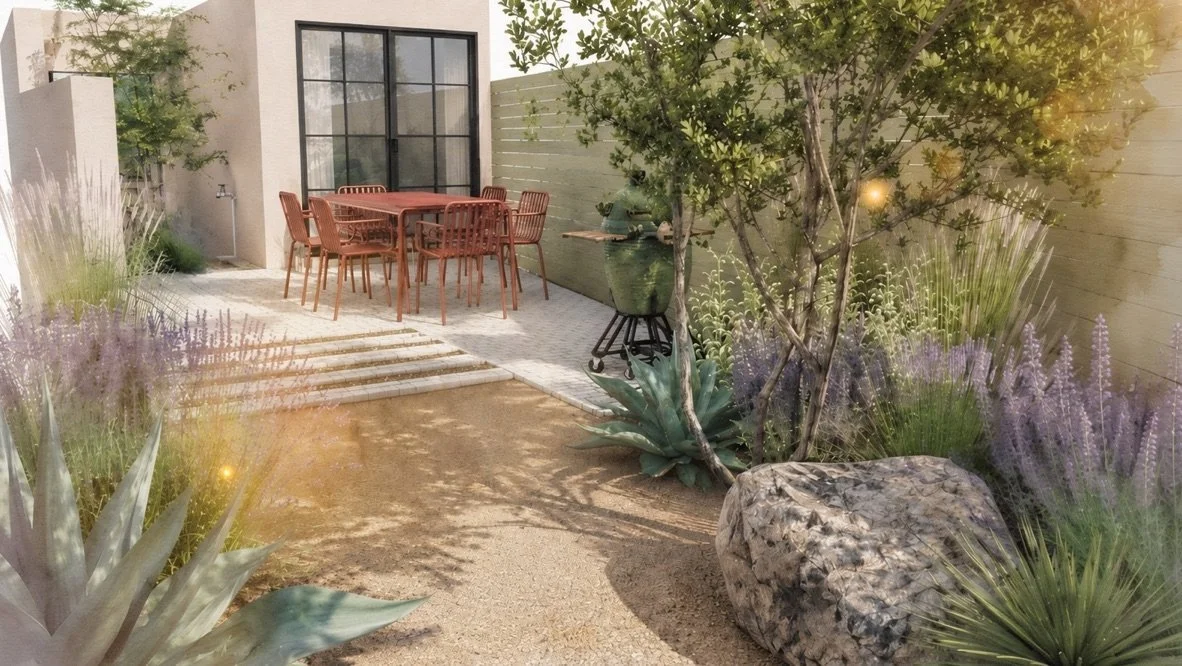
Mark designs immersive spaces that balance structure and softness: strong architectural lines, beautiful materials, and then loose, generous planting that brings movement and atmosphere
If you’d like to speak to Mark about a project, get in touch with him at:
www.markhardydesign.com
Instagram | @markhardydesign

Author: Emma Morley, Director, Trifle*
Emma founded Trifle* in 2010 after a career in marketing, event design and production. Frustrated by the fact that only advertising agencies had inspiring spaces she had a desire to make good design the norm for all office workers. Emma has worked across well over 150 interior projects during her career at the helm of Trifle*, she remains passionate about making amazing spaces but also making the industry more accessible, more human and more diverse.