
Milan Design Week 2026: Highlights
Milan Design Week once again transformed the city into a showcase of ideas, craftsmanship and experimentation. Across Salone and Fuorisalone, a few clear themes emerged, pointing towards a more sensory, material-led and experience-driven future for design.
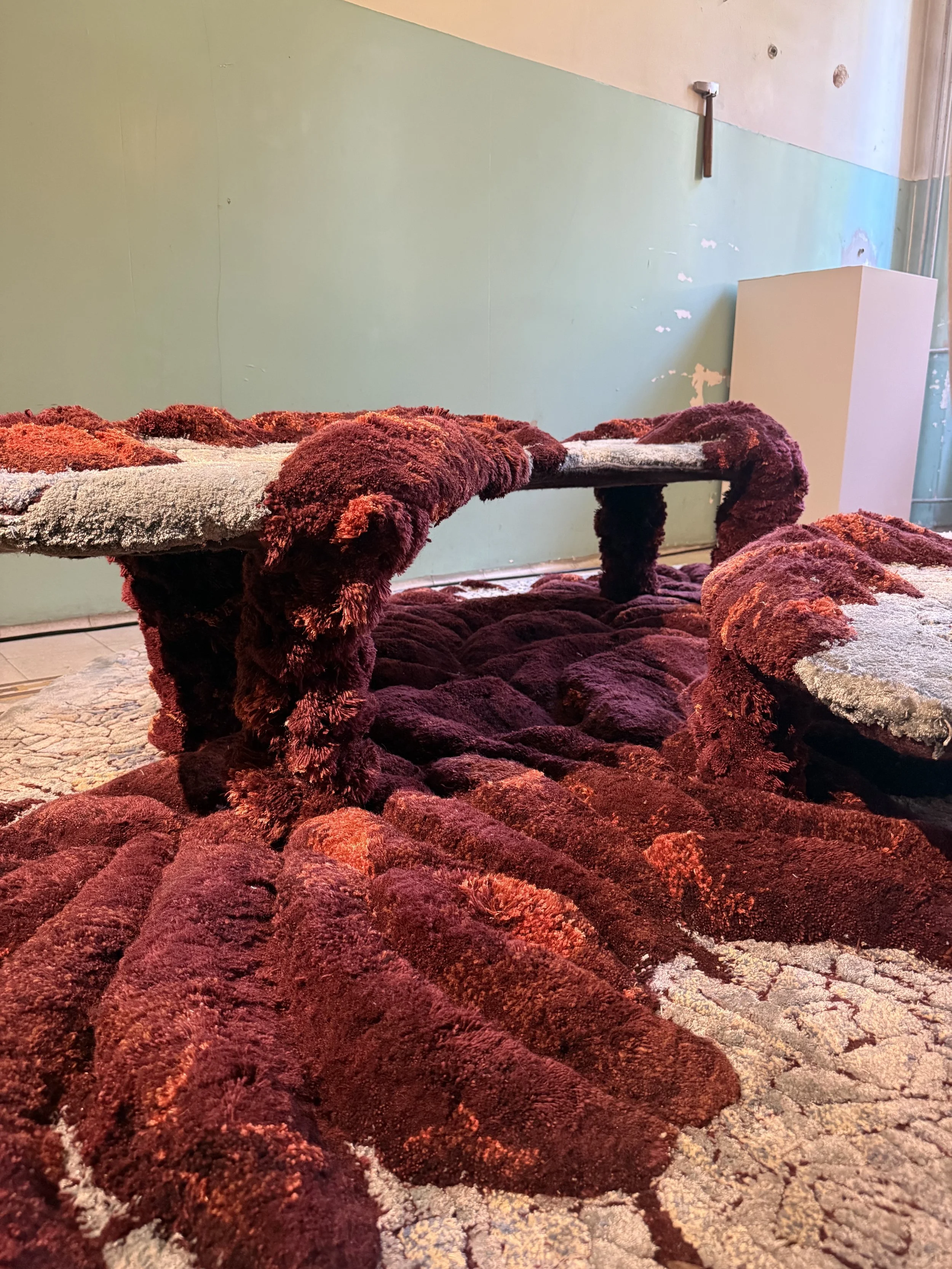
An organic bench and rug structure at Alcova
Key Trends
Sensorial Design
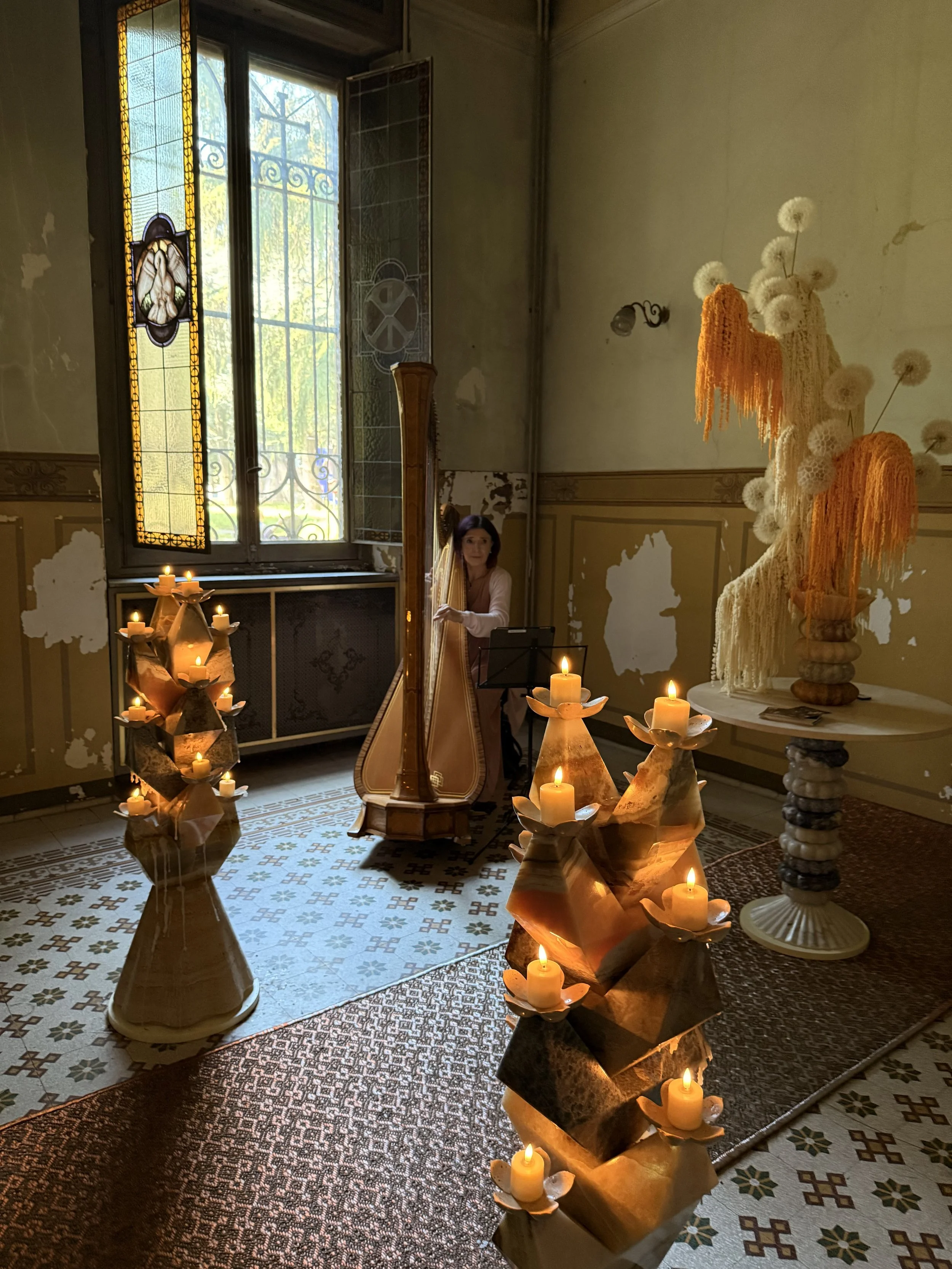
The most compelling installations engaged far more than the eye. From live harp performances and listening rooms to tactile installations and immersive soundscapes, designers explored how spaces can be felt as much as seen.
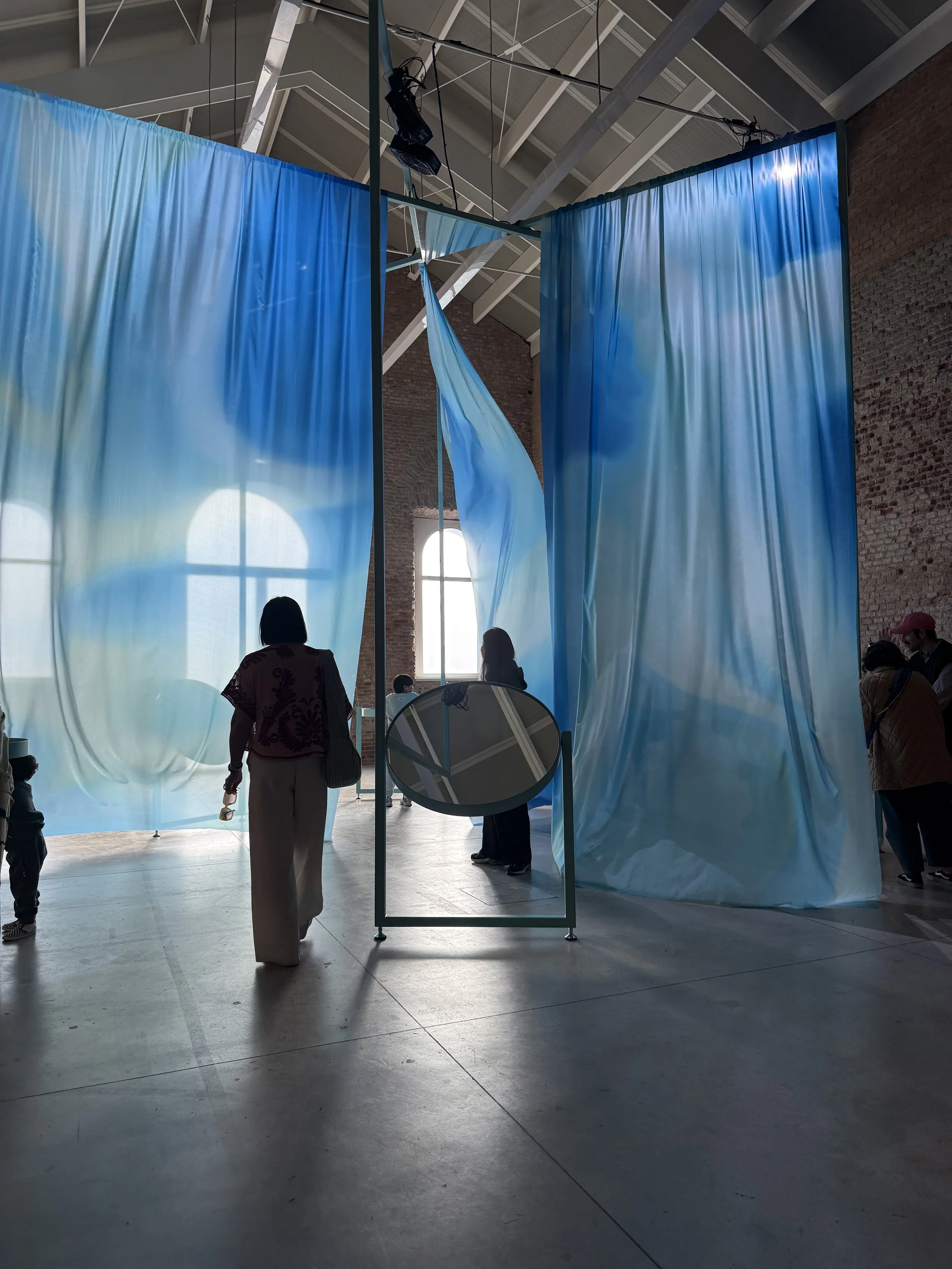
Sound emerged as a recurring theme throughout the week. Highlights included Baxter's listening room featuring the Syd console, Moynat's sculptural speaker installation by Hall Haus, and Bang & Olufsen's collaboration with Antolini. At 5Vie, Sara Ricciardi Studio's ALMA WATER – La Stanza del Mare transformed sound and movement into an interactive experience, while the district's wider theme, QoT – Qualia of Things, championed the quality of human experience over technological novelty.
Together, these projects reflected a growing desire for richer, more meaningful engagement with the built environment.
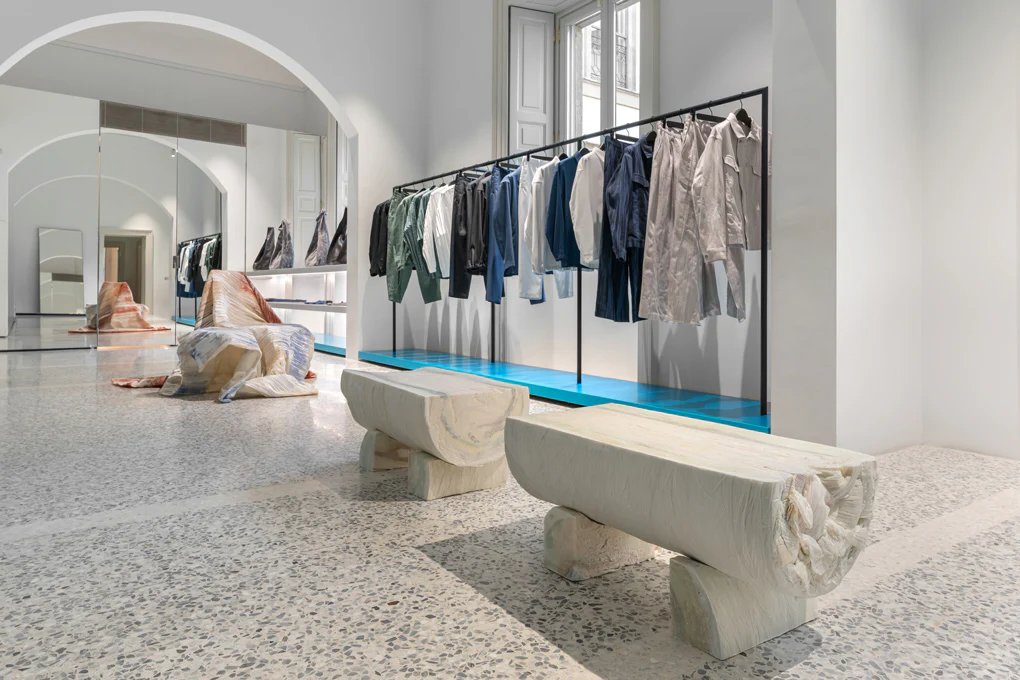
Issey Miyake's The Paper Log: Shell and Core, which transformed paper waste into architectural form
Material Innovation & Circularity
Sustainability conversations continued to mature, with a stronger emphasis on material innovation and circular thinking. Projects explored the creative potential of waste streams, biomaterials and responsible production processes.
A standout was Issey Miyake's The Paper Log: Shell and Core, which transformed paper waste into architectural form. Across the city, designers demonstrated how material experimentation can sit alongside environmental responsibility.
Collectible Design
The line between art and design continues to blur. Limited-edition pieces, sculptural furniture and highly crafted objects featured prominently, reinforcing the growing appetite for design as both functional object and collectible piece.
Fashion & Design
Fashion houses remain an influential presence during Design Week, with major activations from Gucci, Louis Vuitton, Hermès, Dior, Bottega Veneta and Marni. Increasingly, these brands are using design as a platform for storytelling, craftsmanship and cultural collaboration.
Our Highlights
5Vie
5Vie remains one of Milan's most engaging design districts. Its intimate scale, thoughtful curation and focus on craftsmanship encourage a slower, more considered experience.
Alcova
Alcova continues to be one of the week's most exciting destinations, pairing emerging talent with extraordinary locations. Its ability to uncover new voices and experimental approaches remains unmatched.
Triennale Milano
The Triennale once again delivered exhibitions that balanced contemporary relevance with historical context, offering a welcome counterpoint to the commercial energy of the week.
Pasticceria Cucchi × Marni
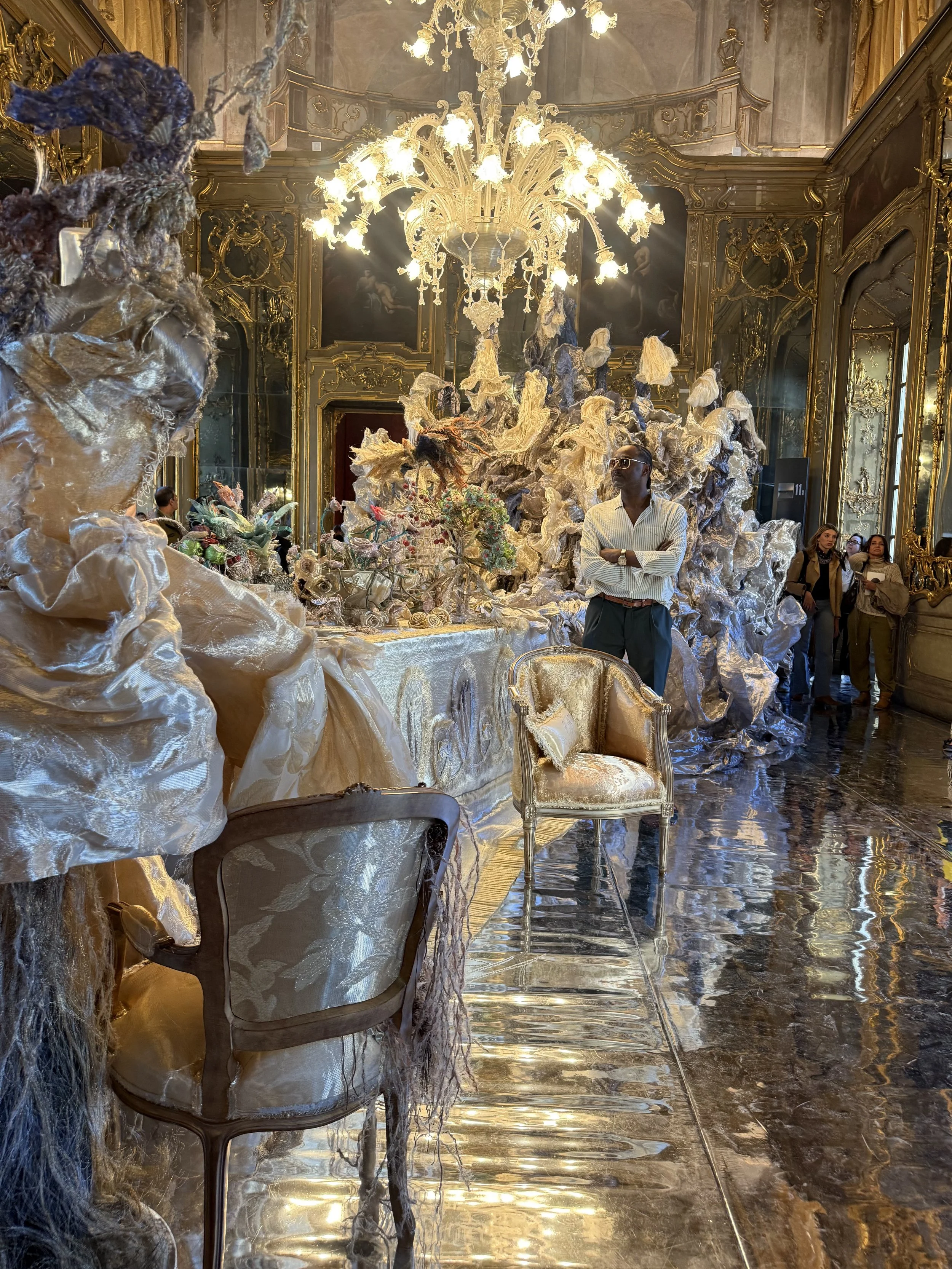
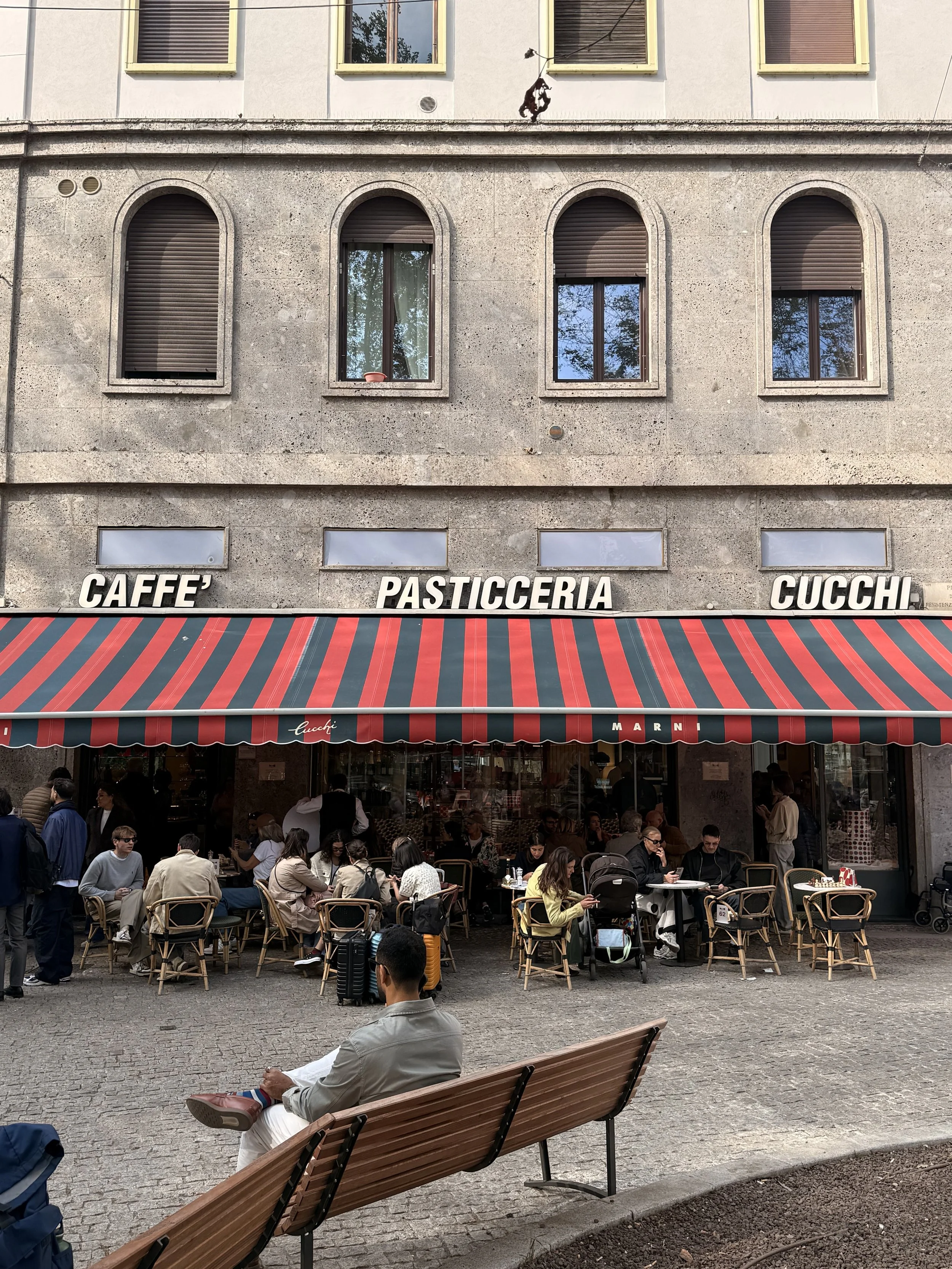
Marni's residency at the historic Pasticceria Cucchi was a standout example of thoughtful collaboration. Playful, authentic and rooted in local culture, it demonstrated how design can enhance rather than overshadow its setting.
Convey
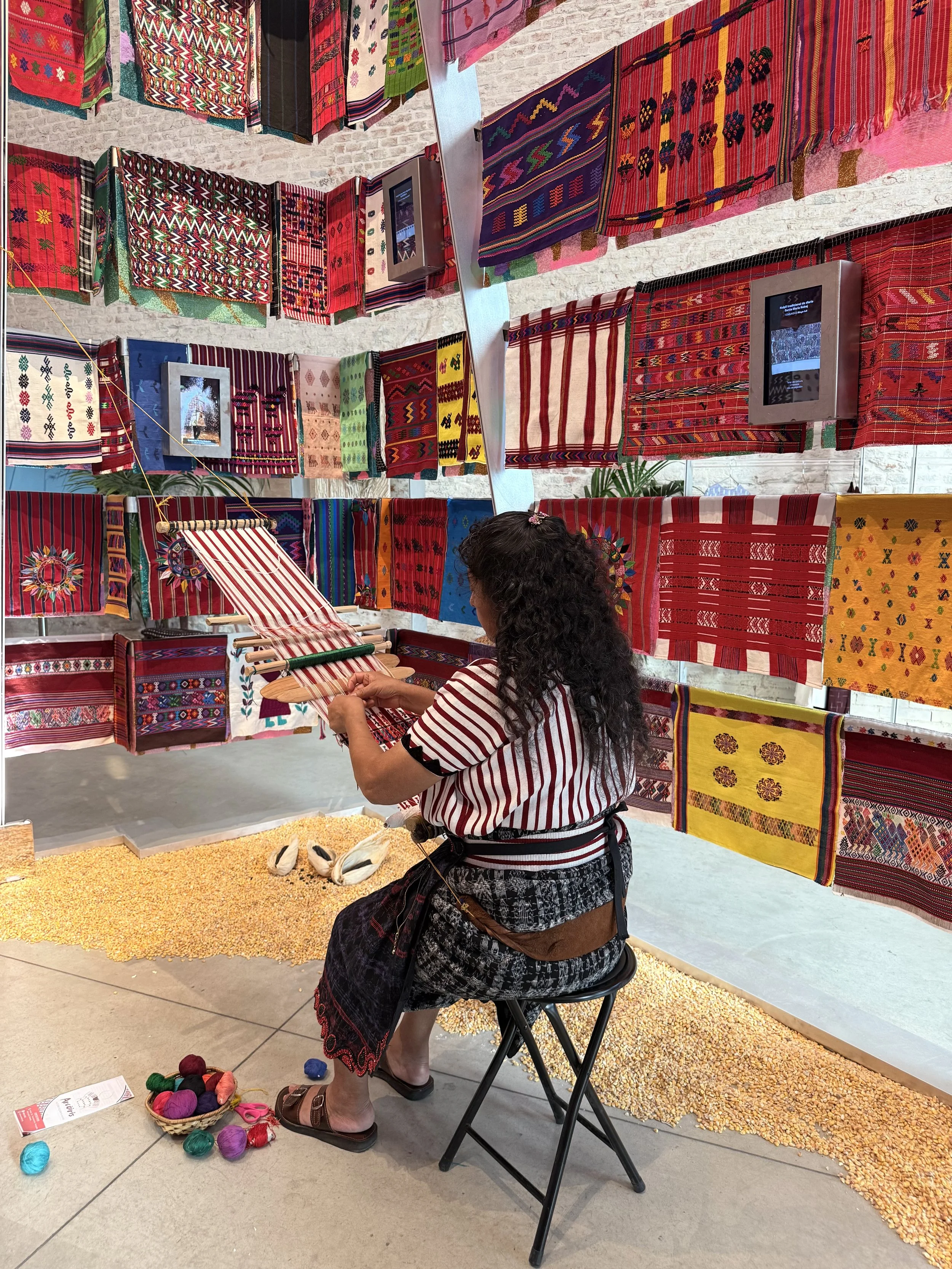
Convey's group exhibition brought together a strong collection of material-led work. The angular, industrial pieces from Project 213A were a particular highlight, offering a confident contrast to some of the softer aesthetics seen elsewhere.
Looking Ahead
As Milan Design Week continues to evolve, the projects that resonated most were often those grounded in materiality, craftsmanship and genuine human experience. Amid the scale and energy of the week, it was the quieter moments of discovery, dialogue and sensory engagement that left the strongest impression.
If 2026 showed us anything, it's that meaningful design isn't always the loudest voice in the room.
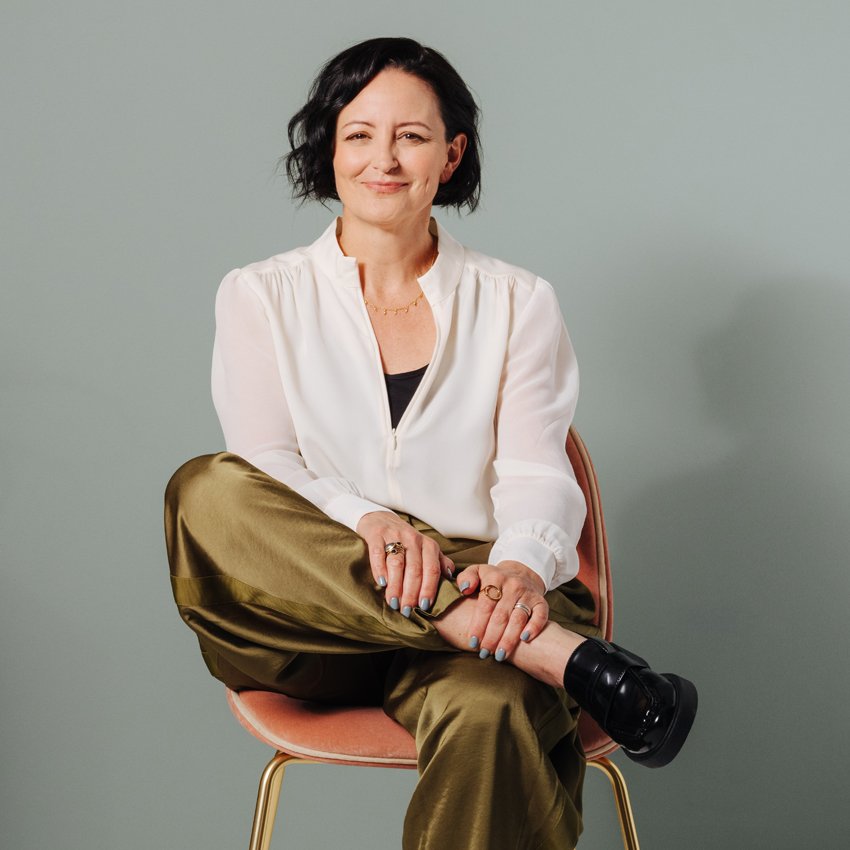
Author: Emma Morley, Director, Trifle*
Emma founded Trifle* in 2010 after a career in marketing, event design and production. Frustrated by the fact that only advertising agencies had inspiring spaces she had a desire to make good design the norm for all office workers. Emma has worked across well over 150 interior projects during her career at the helm of Trifle*, she remains passionate about making amazing spaces but also making the industry more accessible, more human and more diverse.